
Commute questions are almost always the first thing relocating buyers ask me, and they should be: the honest answer changes which towns make sense for your family. Here is the current 2026 picture for the two counties I serve, with the sources and dates so you can check it yourself.
The MBTA Commuter Rail: Worcester Line Basics
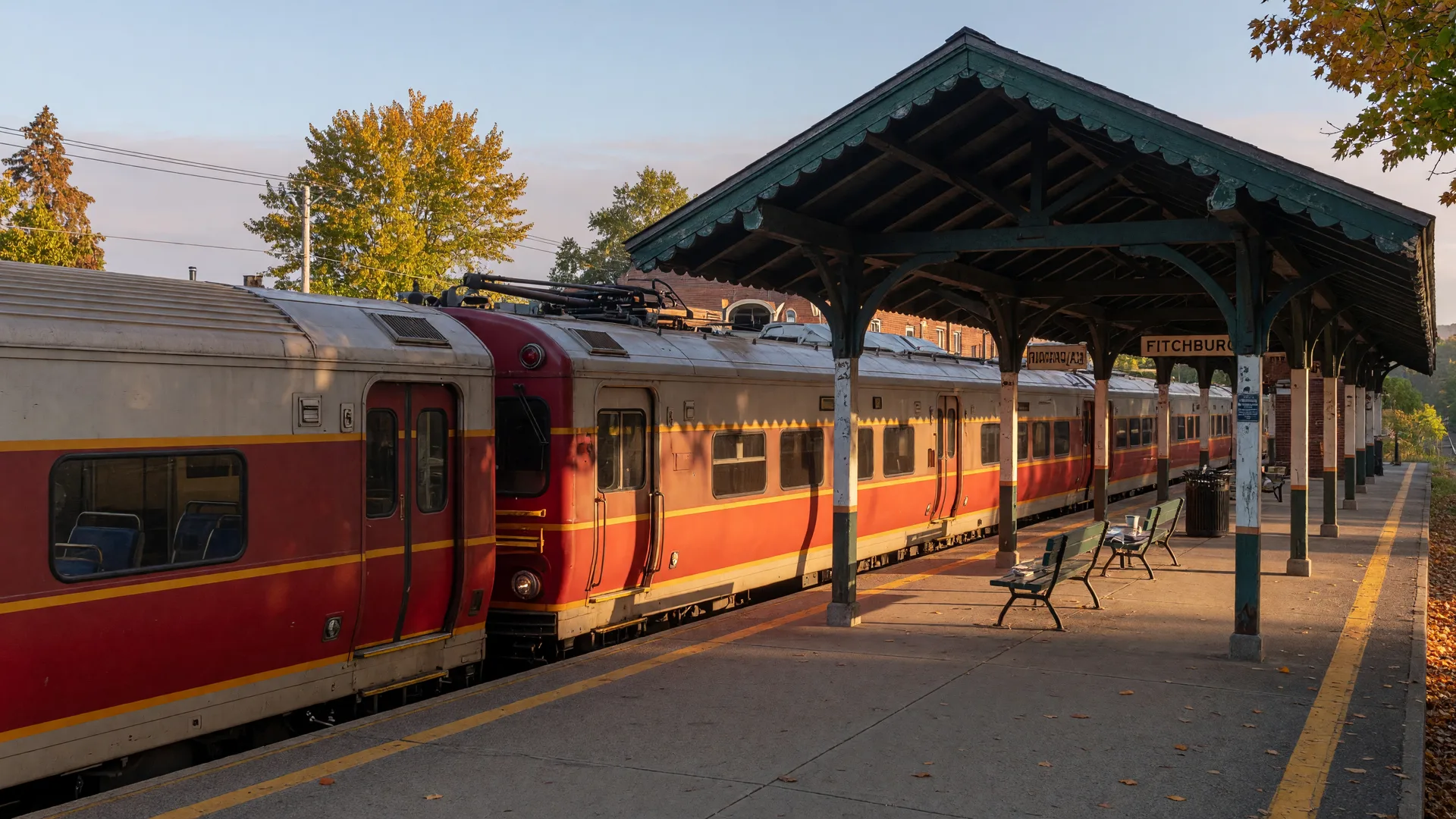
The Framingham/Worcester Line (MBTA calls it the Worcester Line) is the workhorse for Boston commuters in Central Massachusetts. Worcester Union Station is the western endpoint, and the line runs through Grafton, Westborough, Southborough, Ashland, Framingham, and Natick before reaching Boston, with 18 stations total between Worcester and South Station.
All-stops service from Union Station to South Station runs about 1 hour 35 to 40 minutes, so an 8:00 a.m. arrival in Boston means a train leaving Worcester shortly after 6:20 a.m. The MBTA schedules roughly 10 to 11 inbound weekday trains from Worcester, spaced about hourly to every two hours, with the first departure around 5:10 to 5:45 a.m. and the last around 11:25 p.m. Return trips from South Station run from early morning to past midnight. A quality-of-life note: the schedule is not a turn-up-and-go metro, so regular commuters build their day around a specific train.
Many town guides still mention the HeartToHub express "hour" to Boston, but that is out of date. The MBTA ended regular non-stop express service in October 2023 and folded the train into the regular schedule; a single weekday morning express via Framingham and Lansdowne was reintroduced in May 2024, running about 1 hour and 20 minutes. As of fall 2026 there is still no regular non-stop express, and Worcester officials publicly asked the MBTA in August 2026 to bring one back. Plan around the all-stops schedule and watch MBTA announcements.
Boarding east of Worcester shortens the ride. Stations in Worcester County on the line are Worcester (Union Station), Grafton, Westborough, and Southborough; once the train reaches Framingham and Natick in Middlesex County, it is roughly two-thirds of the way to Boston, so towns with stations further east keep more of the trip inside the train's fast middle segment. One correction worth repeating on listing sites and older guides: Shrewsbury has no commuter rail station. The line does not run through the town, and the nearest stations are Worcester Union Station, about 4 to 5 miles away, and Grafton, about 6 miles.
A Practical Tip from Me
[JULIA LOCAL INSIGHT] I tell my commuting clients to take their planned train once before they commit to a town. Sit in the car layout you will sit in for a year, test the parking lot at 7:00 a.m., and time the drive from the house to the platform. A town that looks 10 minutes closer on a map can feel very different at 6:30 in the morning. Parking fills early at the busiest stations, so talk to your agent about what your target station is actually like on a weekday.
Driving Times: The Realistic Numbers
Driving is the fastest option off-peak and the slowest option at rush hour. These are typical figures as of September 2026, based on standard route data; always check live traffic before you leave, and use MassDOT's travel time dashboard for day-of-week planning.
The Mass Pike (I-90) is the main artery from Worcester to Boston, and the bottlenecks around Natick and Framingham are where morning commutes go sideways. The same drive that takes about 55 minutes at 10:00 a.m. frequently runs 1.5 to 2 hours in peak traffic, which is the difference between an easy day trip and a daily endurance test. Worcester to Cambridge follows a similar pattern at about 52 to 55 minutes off-peak and 90 minutes or more at rush hour, and campuses and hospitals across Route 128 in the Waltham and Newton area run 45 minutes to over an hour depending on the hour. Tolls on the Pike are electronic, so an E-ZPass transponder (or the app) is the practical way to pay.
The honest framing for buyers: off-peak drive times understate the real commute, and rush-hour times overstate how bad it is every single day. The figure that matters is the one you measure on the days you will actually travel, so test it in person on a Tuesday morning, not a Saturday afternoon.
Worcester Regional Airport (ORH): Who Flies Where
Worcester Regional Airport is a genuinely useful option for business travelers and families. As of September 2026, three airlines operate scheduled nonstop service, per Massport:
- American Eagle: daily nonstop to Philadelphia (PHL), replacing the former New York JFK nonstop in July 2025.
- Delta Connection: daily nonstop to New York–LaGuardia (LGA).
- JetBlue: daily year-round nonstops to Fort Lauderdale (FLL) and Orlando (MCO), plus seasonal Fort Myers (RSW) service in the winter and spring.
Source: Massport, Worcester Regional Airport airline page, accessed September 2026. Routes change seasonally; verify with the airline.
Because ORH sits inside Route 495 with an easy loop from the Pike, it frequently beats Logan for quick business trips and warm-weather getaways, especially when you factor in parking and security time. For routes ORH does not serve, Logan (BOS) and Providence (PVD) are the practical alternatives, and both are roughly an hour and a half or less door-to-door from most of Worcester County.
Getting Around Worcester Itself
Once you live here, most of daily life is a short drive or a pleasant walk. The WRTA runs local bus service across Worcester and into neighboring towns, the downtown core around the Common and the Canal District is walkable, and rideshare coverage is dependable for evenings out or a ride to Union Station. Families typically find a car covers 95 percent of life, and the train handles the Boston days.
How the Commute Should Shape Your Town Search
Match the commute to the town, not the other way around. If you will ride the train five days a week, Worcester, Grafton, Westborough, and Southborough give you station access within Worcester County, while Ashland, Framingham, and Natick put you further east on the line with shorter rides. If you drive to Cambridge or Route 128, towns along the Pike and I-290, like Shrewsbury, Auburn, and Holden, stay practical. If you only need Boston a day or two a week, the trade-off changes: a quieter, more affordable town in the Wachusett region or south county starts to make sense.
There is no universally "best" commute town, only the one that fits your schedule, your budget, and your priorities. That is exactly the conversation I have with relocating buyers before they ever tour a property, and it is the reason my community guides start with transit and traffic rather than finishes.
Plan your move with a local.
I help relocating buyers test commutes, compare towns, and find a home that fits real life, not just a floor plan.
Commute math is personal, and the numbers above are typical figures, not a guarantee for any specific day or route. I am happy to walk through your actual commute, the stations you would use, and the towns that make it work.

- MBTA Framingham/Worcester Line schedule and station list (mbta.com/schedules/CR-Worcester)
- MassDOT traveler information and roadway travel time dashboard
- Massport: Worcester Regional Airport airlines and destinations
- MassLive: Worcester leaders' August 2026 request to restore MBTA express service
- Route distance and drive-time references (TravelMath, Rome2Rio, accessed September 2026)
Figures are typical values as of September 24, 2026, and change with schedules, traffic, and seasons.