
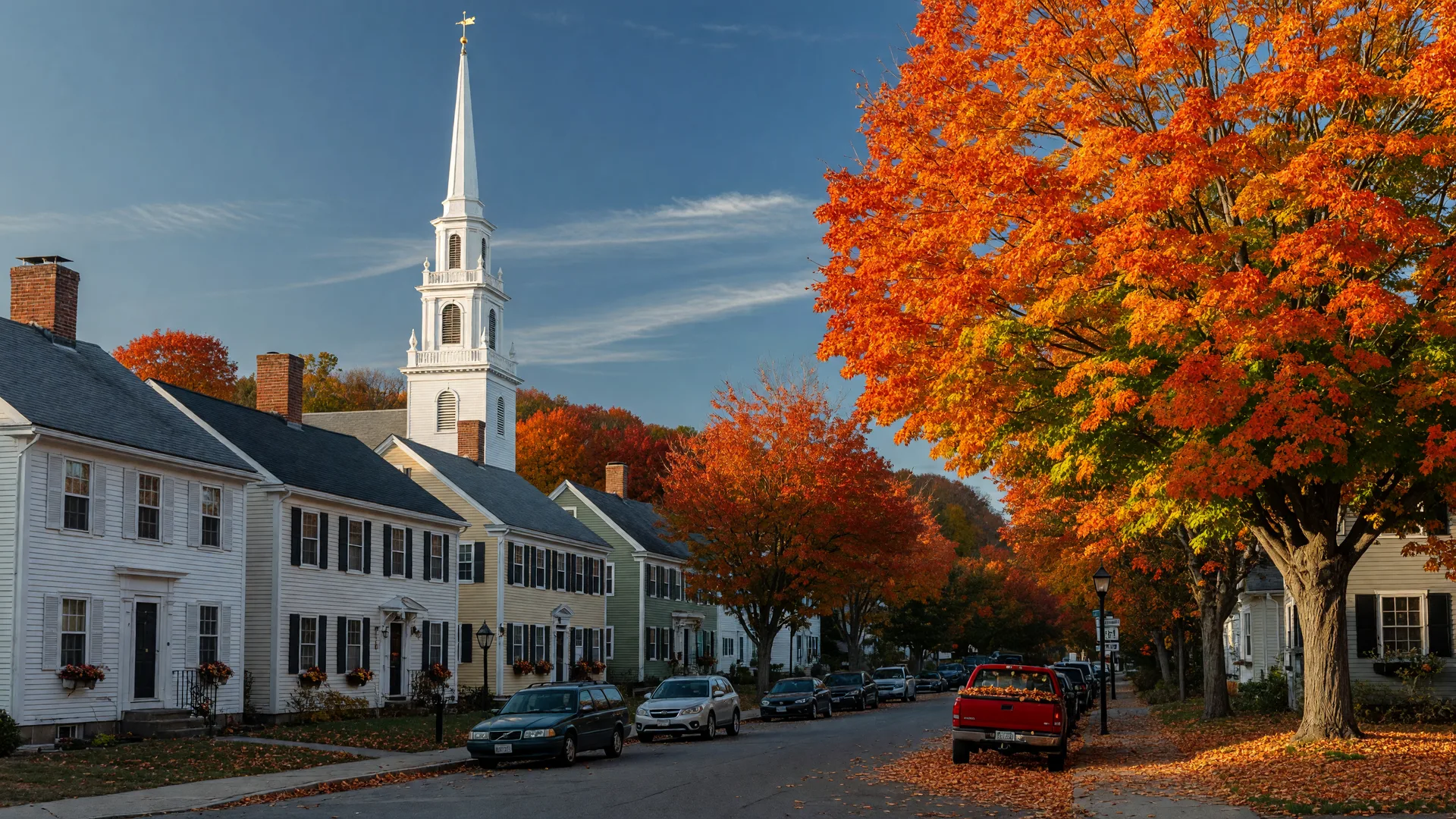
Relocating to
Massachusetts.
Planning a move to Massachusetts? This guide walks you through what it really costs, what the taxes and seasons are like, how commuting works, and where to land. Worcester County and Middlesex County offer top schools, commuter access to Boston, and a quality of life that keeps people here for generations.
Start your home search before you arrive.
Browse active listings across Worcester and Middlesex County with my free buyer search tool, and see what your budget can do in each community.
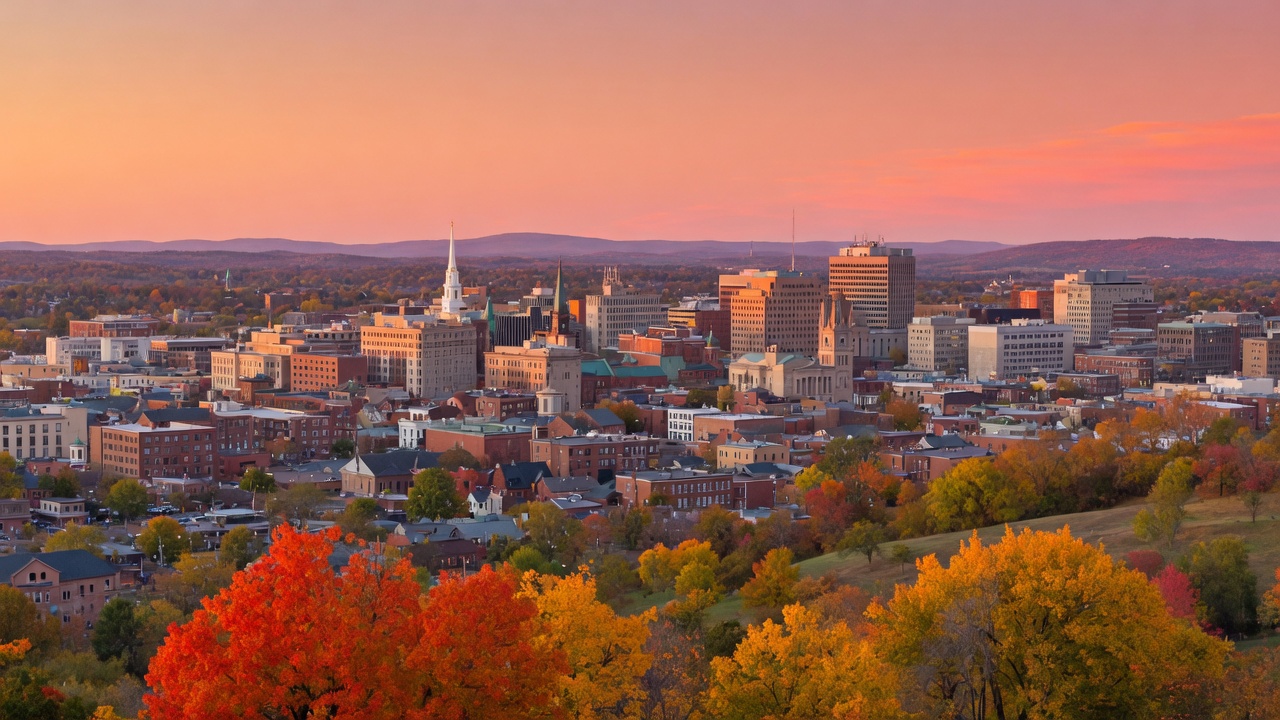
Worcester, Massachusetts
A great place to land.
Central Massachusetts and MetroWest are where some of the state’s best opportunities meet its most welcoming communities.
Worcester County delivers more home for the money, a revitalized city with a growing dining and arts scene, and commuter rail straight to Boston. Middlesex County stretches west of the city with top-ranked schools, historic town centers, and some of the most desirable addresses in New England.
Both counties sit inside Route 495, which means you get Boston’s economy within commuting distance without Boston’s price tag. For first-time buyers, growing families, and empty nesters alike, this part of Massachusetts is a rare combination of value, quality of life, and opportunity.
What day-to-day life
really costs.
Worcester’s overall cost of living runs roughly 15 to 20% above the national average, and housing is the main driver. As of 2025–2026 data, Areavibes puts Worcester’s index at about 120 (20% above the U.S. average), ERI at roughly 115 (15% above), and Salary.com’s 2026 estimate at about 122 (22% above). The good news: rents and home prices in Central Massachusetts and MetroWest remain a fraction of Boston’s, and everyday costs like groceries track close to the national norm.
Housing & Rent
Average rents in Worcester ran about $2,000 to $2,100 a month in mid-2026 data (Zumper median $2,000; RentCafe average $2,054; Zillow about $2,100), well below Boston and roughly in line with the national average. Buying power stretches further too: home prices across Worcester County remain far under Greater Boston.
Utilities
New England energy prices keep utility costs above the national average on most cost-of-living indexes. Budget for real winter heating bills, and look for homes with modern insulation and efficient systems.
Groceries
Grocery prices in Worcester run close to the national average, within a few points either way on 2025-2026 cost-of-living indexes. Everyday food shopping won’t be a shock, and Massachusetts exempts groceries from sales tax entirely.
Taxes
Massachusetts pairs a simple 5% flat income tax with a statewide 6.25% sales tax, no tax on groceries, and no tax on most clothing under $175. Property taxes are set locally and run slightly above the national average; see the taxes section below for current Worcester numbers.
A simple, predictable
tax picture.
Massachusetts levies a flat 5% state income tax on most earnings, plus a 4% surtax on income above roughly $1.08 million. That single flat rate is one reason transplants find the state’s tax picture easier to plan around than multi-bracket systems elsewhere.
The statewide sales tax is 6.25%, and there are no local sales taxes on top of it. Groceries for home consumption are fully exempt, and most clothing and footwear priced at $175 or less per item is exempt too, which adds up for families.
Property taxes are set locally by each city and town, and Massachusetts rates generally run above the national average, with effective rates commonly around 1.1 to 1.3% of home value. A concrete example: Worcester’s residential rate for fiscal year 2026 (July 1, 2025 to June 30, 2026) is $13.28 per $1,000 of assessed value, approved by the City Council in December 2025, with an average residential tax bill of about $5,446, up roughly 3.4% from the prior year (City of Worcester; MassLive, December 2025). Rates change every fiscal year and vary widely by town, so ask for the actual tax bill on any home you are considering rather than applying a state average.
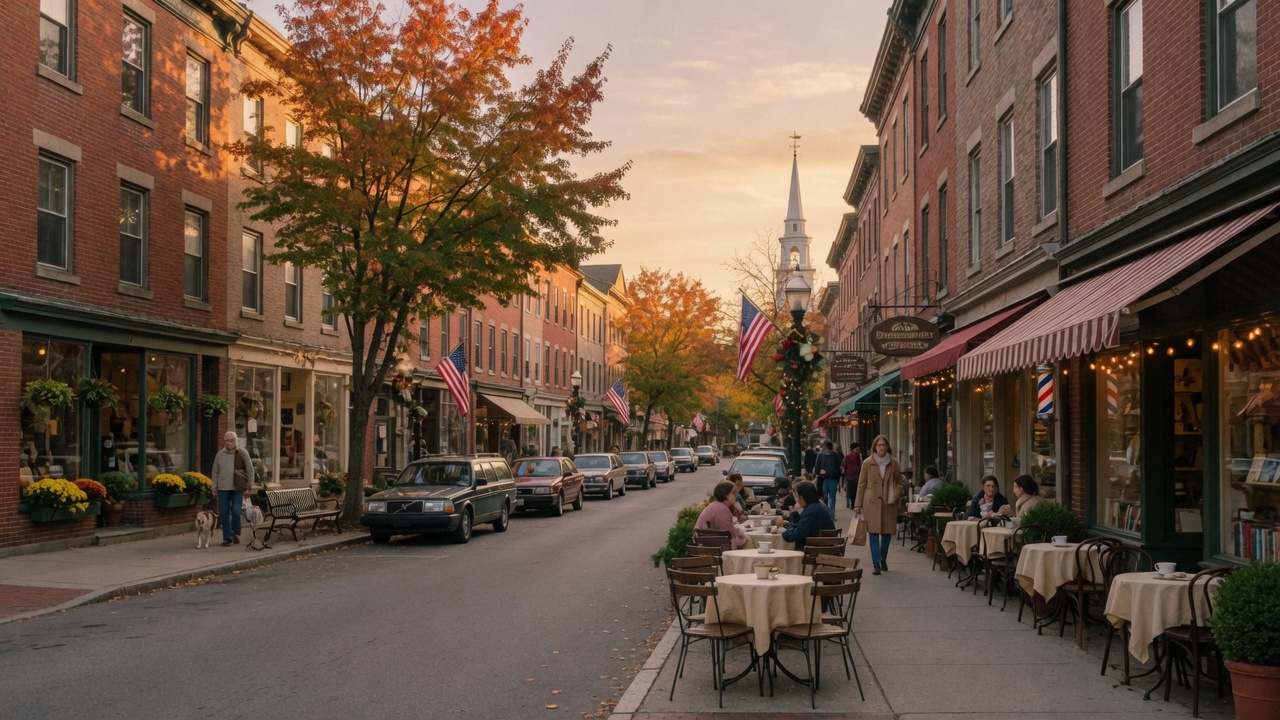
Middlesex County, Massachusetts
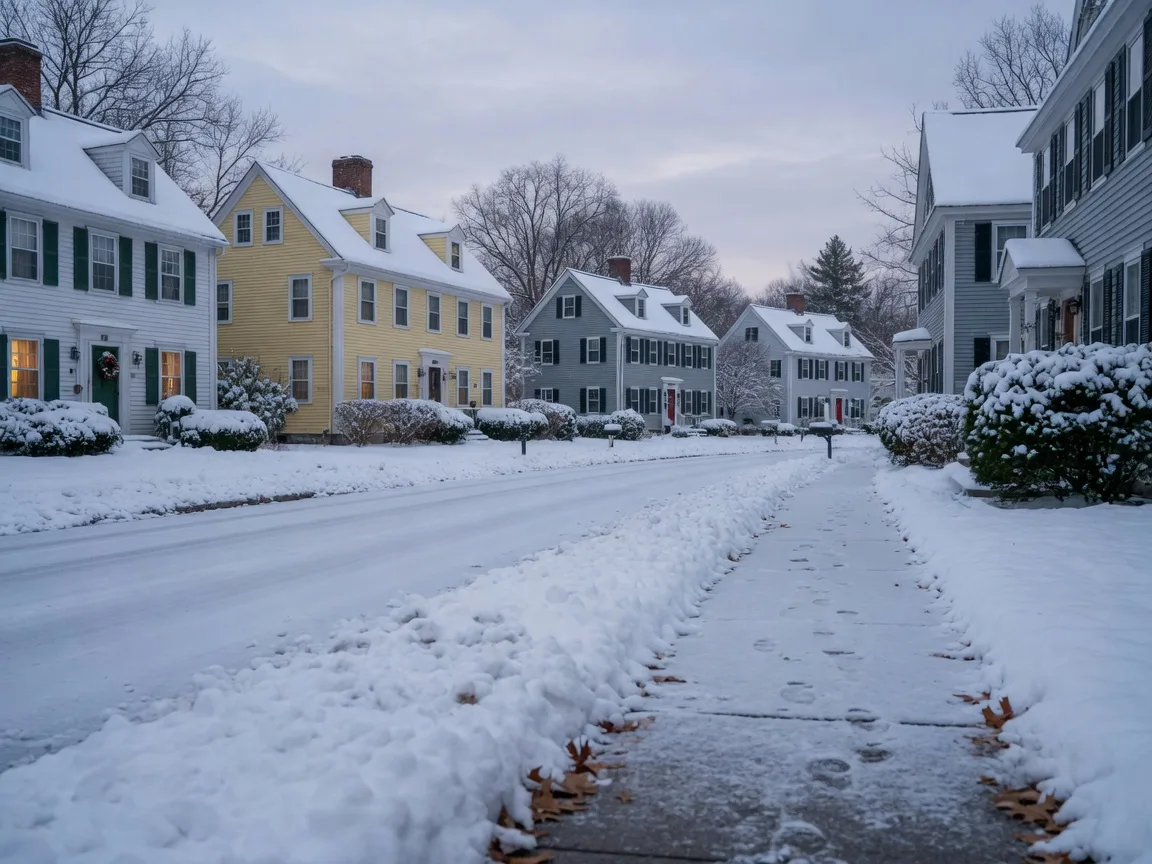
Winter in Central Massachusetts
Four seasons,
all of them real.
Massachusetts delivers four distinct seasons. Winters bring snow, cold, and the occasional nor’easter, and locals lean into them: skiing, snowshoeing, and cozy fireplace weekends. Budget for winter heating and a good snow shovel, and you will be fine.
Autumn is the region’s showpiece. From late September through October, the foliage turns brilliant reds, oranges, and golds, and the weather is crisp and perfect for exploring new towns. It is a genuinely good time to house-hunt.
Springs are cool, green, and full of bloom, and summers are warm with comfortable humidity compared with much of the South and Midwest. New Englanders say if you do not like the weather, wait a minute: the change is part of the charm.
Boston within reach,
without the Boston price.
Worcester County and Middlesex County sit inside the Route 495 belt, with commuter rail, the Mass Pike, and a regional airport connecting you to Boston and beyond. Here is how people get around.
MBTA Commuter Rail (Framingham/Worcester Line)
The workhorse for Boston commuters: about 10 to 11 inbound weekday trains from Union Station to Boston South Station, roughly 1 hour 35 to 40 minutes all-stops as of September 2026. There is no regular non-stop express right now, so plan around the full trip and check mbta.com for the current timetable.
I-90 (Mass Pike)
The Mass Pike slices straight through Worcester, Westborough, Southborough, and Framingham en route to Boston. Worcester to Boston is about 42 to 47 miles, roughly 55 minutes off-peak and commonly 1.5 to 2 hours in peak traffic (typical figures, September 2026). It is also the fastest road link to Logan Airport.
I-290
Connects Worcester to the Route 495 belt and the Marlborough area, making the loop between Central Massachusetts and MetroWest quick and direct.
I-495 (Route 495)
The outer beltway that ties the region together. It runs through Westborough, Southborough, Marlborough, and Hudson, linking the Worcester area to the Route 128 tech corridor, Lowell, and points south.
Route 9
An east-west artery through Worcester, Shrewsbury, Westborough, Southborough, Framingham, and Natick. It is lined with shopping, dining, and services, and it offers an alternate route into Boston.
Worcester Regional Airport (ORH)
Direct nonstop service to Orlando and Fort Lauderdale (JetBlue, year-round), New York-LaGuardia (Delta), and Philadelphia (American Eagle), plus seasonal Fort Myers service as of September 2026 (Massport). Skip Boston traffic for quick getaways; routes change seasonally, so verify with the airlines.
Commute figures above are typical values as of September 24, 2026 (sources: MBTA Framingham/Worcester Line schedule, MassDOT traveler information, and Massport). Schedules, traffic, and air routes change, so always check the current timetable before planning a move. Want the full breakdown with weekday train times, rush-hour drive estimates, and airport details? Read my 2026 Worcester-to-Boston commute guide.
Where to start looking.
These communities come up again and again with relocating buyers. Each one has a distinct character, so think about how you actually want to live: walkable downtown, big yard, top schools, quick commute.
Worcester County
Explore the countyWorcester
New England’s second-largest city is in the middle of a renaissance: Polar Park, the Canal District, the Worcester Art Museum, and a downtown that keeps improving. It offers the region’s most diverse housing stock and direct commuter rail to Boston.
Westborough
A classic commuter town with its own rail station on the Worcester line, an excellent public school system, and easy access to Route 495 and Route 9. Families love the blend of convenience and small-town feel.
Shrewsbury
Perennially praised public schools and a family-first suburban feel just minutes from Worcester. Lake Quinsigamond adds recreation, and the commute to Boston is straightforward.
Grafton
Historic charm, working farms, and growing neighborhoods anchored by a picture-perfect village center. A commuter rail station on the Worcester line makes it a smart pick for Boston commuters.
Holden
Quiet residential streets, the Wachusett Regional School District, and some of the region’s best access to nature. An easy drive to Worcester’s jobs, dining, and the Mass Pike.
Auburn
Sits right at the junction of the Mass Pike and I-290, making it one of the most commute-friendly towns in Central Massachusetts. Solid schools and convenient retail make it a practical choice.
Southborough
Home to some of the area’s most highly rated schools, including Algonquin Regional High School. Commuter rail service and Route 9 access keep Boston within easy reach.
Middlesex County
Explore the countyMarlborough
A Route 495 and Route 20 crossroads with a growing tech and biotech corridor and a revitalized downtown. Historically strong value for first-time buyers and commuters.
Framingham
The hub of MetroWest and the largest community in the region: commuter rail to Boston, major employers, Framingham State University, and housing for every stage of life.
Natick
Natick Mall, Lake Cochituate, and a charming town center with a commuter rail stop in the middle of it all. The schools are well regarded and the drive to Boston via the Pike is a straight shot.
Hudson
A former mill town that has become MetroWest’s dining and brewery destination, with a lively downtown and attractive pricing. Route 495 access keeps commutes reasonable.
Wayland
Conservation land, country roads, and one of the state’s most highly regarded school districts. A quieter, more rural-feeling choice with premium homes on generous lots.
Sudbury
Historic New England character, large lots, and the acclaimed Lincoln-Sudbury Regional High School. A settled, family-focused town with deep community roots.
Concord
Where American history began: Walden Pond, Minute Man National Historical Park, and a picture-perfect village center. Commuter rail on the Fitchburg line and some of the state’s most storied real estate.
Education is a
regional strength.
Massachusetts consistently ranks among the top states in the nation for public education, and Worcester and Middlesex Counties carry that reputation town by town.
Districts in Shrewsbury, Westborough, Southborough, Natick, Wayland, and Sudbury are frequently cited among the state’s best, with schools like Algonquin Regional High School and Lincoln-Sudbury Regional High School drawing families from across New England. Concord pairs its historic character with a well-regarded district of its own.
Because Massachusetts funds schools largely through local property taxes, district quality tracks closely with community. School assignments follow your address, so researching feeder patterns and districts is a big part of narrowing your town list, and I can help you interpret it.
Private and parochial options round out the picture: Worcester Academy and Bancroft School in Worcester, St. John’s High School in Shrewsbury, and independent and parochial schools across MetroWest give families additional choices at every grade level.
Massachusetts public schools are consistently ranked among the top in the nation, and Massachusetts is home to some of the world’s best universities, a short drive from Central Massachusetts and MetroWest.
World-class care close to home.
UMass Memorial Health
The region’s academic hub. UMass Memorial Medical Center in Worcester is the largest health system in Central Massachusetts, with Marlborough Hospital and a broad network of community practices across both counties.
Saint Vincent Hospital
A full-service community hospital in Worcester offering emergency care, surgery, maternity, and specialty services to the surrounding region, with satellite locations that make care convenient.
Mass General Brigham
The state’s premier network reaches into the region through the Spaulding Rehabilitation Outpatient Center in Westborough, the Brigham and Women’s neurosurgery program at Milford Regional, the Dana-Farber Brigham Cancer Center in Milford, and affiliated primary care practices across MetroWest.
Five steps to your
Massachusetts home.
Buying from another state is very doable when you have the right team. Here is the process I walk out-of-state buyers through, step by step.
Get pre-approved
Before you look at a single listing, get a mortgage pre-approval from a lender who knows the Massachusetts market. It locks in your budget and makes your offer credible in a competitive market where sellers move fast.
Find a local agent
Choose an agent who works the towns you are considering. A true local knows the neighborhoods, the school districts, the price points, and what an offer needs to win. Interview a couple and pick someone who listens.
Narrow your towns
Match your non-negotiables: commute, schools, budget, lifestyle. The communities in this guide are a great starting place, and most buyers narrow their list to two or three towns before touring.
Plan your visits
Come see the area in person, ideally in the season you plan to live there. Drive the commute at rush hour, walk the downtowns, and visit the schools. Get a feel for how each town fits your family.
Go under contract
With a local agent managing comps, offer strategy, and negotiations, you can move to contract with confidence from anywhere. I offer virtual tours and video walkthroughs and coordinate inspections and on-site needs so out-of-state buyers can relax.
Buying from far away?
I will walk you through homes by video, handle the on-site details, and keep you informed at every step from offer to closing. Many of my clients buy remotely with total confidence.

Julia Connolly, REALTOR®|Lamacchia Realty
ABR®, SRS®, A.I. Certified Agent™
Certified Real Estate Consultant℠
Let’s move you
to Massachusetts.
Whether you are relocating for a job, family, or a fresh chapter, I will help you find the right town and the right home. I have guided first-time buyers, growing families, and empty nesters through moves from across the country, and I love introducing newcomers to this part of Massachusetts.
MA License #9574228 · REALTOR® · Lamacchia Realty