
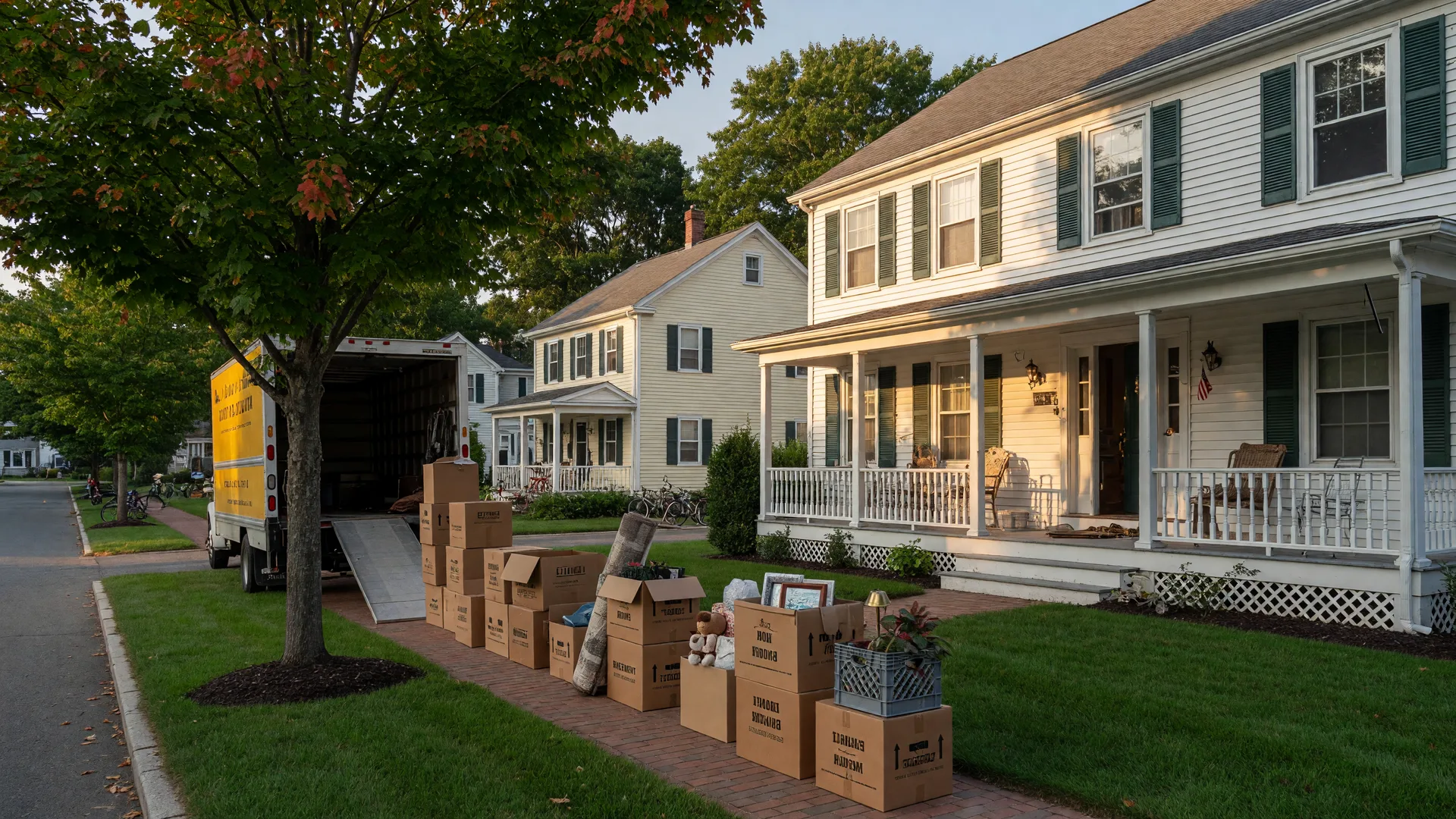
Short answer: yes, most Central Massachusetts families can buy their next home before their current one sells, and in today’s more balanced market it is more workable than it has been in years. The right approach depends on your equity, your budget, and your timeline. Here is how the four most common strategies work, what they cost, and how to pick the one that protects you.
Can I buy my next home before my current one sells?
The direct answer is usually yes. The four paths move-up buyers use are selling with a rent-back agreement, a bridge loan, a HELOC opened before you list, or a contingent offer. Each trades a little money for flexibility, and the best fit depends on your equity and how competitive your next town is. I break all four down below, then show you how to choose.
Why this question is everywhere right now
This question has moved to the top of the list for a reason: the market is rebalancing. Lamacchia Realty’s 2026 Mid-Year Review for Worcester County shows homes sold down 6.5% in the first half of the year compared with 2025, while new listings climbed 4.2% and pending sales rose 2.6%. More inventory is giving families breathing room that simply did not exist two years ago. Active listings in Worcester County are up more than 11% year over year, and months of supply has climbed to about 2.4. I walked through all of it in my August market update.
At the same time, mortgage rates have settled near 6.66% for a 30-year fixed loan in Massachusetts as of September 1, 2026, according to Bankrate’s rate tracker. Forecasters do not predict a sharp drop this fall, more of a gradual easing, so waiting for a big rate move is a gamble rather than a plan. That forecast is an opinion about the future, not a promise, and I will always label it as such. For move-up buyers, the practical effect is real: many homeowners who bought or refinanced at very low rates stayed put for years, and now that rates have settled and inventory has grown, more of them are deciding the timing is finally right to trade up. My guide to knowing when it is time to sell covers that decision in more depth.
Path 1: Sell first, then rent back
How it works: You sell your current home, then stay in it as a renter for an agreed window, often two to six weeks and sometimes longer, while you close on your next home. The new owners become your landlords for that short period, and the terms go in writing in your purchase and sale agreement.
Why families choose it: It is the strongest buying position you can have. Your offer on the next home carries no sale contingency, which sellers love in a competitive market, and you are never carrying two mortgages at once.
What to watch: You move twice. Budget for two moves plus any temporary storage, and give yourself a realistic rent-back window so you are not racing to close on the new home.
Path 2: Use a bridge loan
How it works: A bridge loan is short-term financing, typically 6 to 12 months, that lets you tap the equity in your current home to fund the down payment and closing costs on the next one before you sell. These loans are often interest-only for the term.
Why families choose it: You can make a clean, non-contingent offer and buy on your timeline, then sell your current home on a timeline that maximizes its price rather than one that just gets it done.
What to watch: Bridge loans cost more than traditional financing, with added fees and a second monthly payment while it is open. Your lender will stress-test your debt-to-income ratio with both payments in place.
Path 3: Open a HELOC before you list
How it works: A home equity line of credit gives you access to a portion of your current home’s value. Because lenders typically require the HELOC to be in place before your home hits the market, this is a planning-ahead move.
Why families choose it: HELOC rates are usually lower than bridge loans, and you only pay interest on what you actually draw. It is flexible cash for a down payment or a bridge while your current home is on the market.
What to watch: You are adding a payment on top of your current mortgage. Many buyers use the HELOC to buy first and then pay it off at closing when their old home sells, but your lender has to approve the extra monthly obligation in the meantime.
Path 4: Make a contingent offer
How it works: You make an offer on the next home that is contingent on selling your current one, typically a sale-and-settlement contingency. The purchase only finalizes once your current home closes.
Why families choose it: It protects you from carrying two homes. If your home does not sell, you are not stuck owning two properties.
What to watch: In a competitive market, sellers often prefer offers with fewer contingencies. A contingent offer can lose to a cleaner one, and some sellers keep the right to keep marketing the home and accept a better, non-contingent offer if one arrives, the so-called bump clause. It is often the most convenient option and sometimes the weakest at the negotiating table.
The four paths at a glance
Best for: Families who want the strongest offer possible and can handle two moves.
Watch out: Double moving costs and a firm closing deadline.
Best for: Buyers with strong equity who want to buy first with no contingency.
Watch out: Higher cost and a second payment while it is open.
Best for: Equity-rich homeowners who plan ahead and want flexible, lower-cost access to cash.
Watch out: An extra monthly payment and the need to open it before listing.
Best for: Families who want maximum protection and are shopping in a slower market.
Watch out: Weaker negotiating position and bump clauses.
Which path is right for you?
Here is how I help clients think about it:
- Strong equity and a steady income: a bridge loan or HELOC lets you buy with confidence and then sell your current home on your terms.
- A fast, certain sale ahead of you: a rent-back turns your sale into your strongest buying card.
- A slower or seasonal market, or a unique home: a contingent offer keeps you safe, and we price and market to sell quickly.
- Limited cash for double payments: selling first and renting back usually stretches your budget the farthest.
No single answer fits every family. The number that matters most is what your current home would realistically sell for today, and that is exactly what a market analysis gives you.
Massachusetts money realities to budget for
Two things shape every move-up transaction here:
Closing costs on both sides. Massachusetts is an attorney state, meaning a real estate attorney is part of every closing, and you will pay closing costs on the home you sell and the home you buy. Budget roughly 2% to 5% of each purchase price in closing costs, and your lender will give you an exact estimate. My guide to the real cost of homeownership lays out the ongoing numbers every owner should know.
Your debt-to-income ratio. Lenders typically want your total monthly housing and debt payments under about 43% of gross income. If you carry two mortgages or a bridge loan during the overlap, that second payment counts against you.
One more item to plan for: any capital gain on your current home. Most homeowners qualify for a capital gains exclusion on a primary residence, but the rules have limits. That is a conversation for your tax professional, not a number I will promise you. I am a real estate agent, not a tax advisor, and I will always say so.
What to look for when you move up in Central Massachusetts
Every family’s “next right home” looks different, and I will never steer you toward or away from a town based on anything but your own priorities. The features move-up buyers most often weigh are commute time to work, school fit for their kids, room to grow, yard and storage, and long-term resale appeal.
Some families find that mix in Shrewsbury or Westborough, others in Grafton or Holden, and still others in Middlesex County towns like Hudson, Marlborough, Framingham, or Natick. Explore the Worcester County area guide and the Middlesex County area guide, plus my community spotlights. These are just examples. The right town for you depends on your commute, your kids, and your lifestyle, and I will help you compare neighborhoods on the things that actually matter to your family.
Your next three steps
- Get a current market analysis of your home. Find out what it could realistically sell for today before you choose a path. I provide this free, with no obligation.
- Talk to a lender about your buying power. Ask specifically about bridge loan and HELOC options, and get pre-approved for the next home so you know your ceiling.
- Map the timeline together. We line up the list date, the expected close, your rent-back window if you want one, and the target closing on your next home, so nothing catches you by surprise.
If you are a move-up buyer thinking about selling and buying at the same time, let’s talk. I will run the numbers on your current home, walk you through these options in plain English, and build a timeline that protects your family and your budget. Reach out any time; I am here to help.
buy before you sell Massachusetts
should I buy before I sell my house, bridge loan Massachusetts, how to buy a house before selling yours, sell and buy at the same time, contingent offer vs bridge loan, rent back agreement Massachusetts, move-up home buyer Worcester County
September 2, 2026 / September 2, 2026
Wondering if you should buy your next home before your current one sells? In this week’s post I break down the four ways move-up buyers in Central Massachusetts make it work: rent-backs, bridge loans, HELOCs, and contingent offers, with honest trade-offs for each. Read it on the blog, and message me if you want help running your numbers.
Mortgage rates, market figures, and forecast data in this post were verified on September 2, 2026. Estimates, forecasts, and general guidance are labeled as such and are not guarantees. Nothing here is financial or tax advice.