
Straight answer: yes for the vast majority of homeowners. The Affordable Homes Act, effective February 2, 2025, requires every Massachusetts city and town to allow one self-contained accessory dwelling unit (ADU), up to 900 square feet or half the size of the main home, whichever is smaller, as a by-right use in single-family residential zoning. No special permit, no variance, no requirement that you live on the property. Your town still applies its own reasonable rules on setbacks, height, and design, and you will need a building permit, but the blanket bans are gone. Here is the full picture for Worcester County and Middlesex County homeowners, including what Worcester itself requires.
Can I build an accessory dwelling unit on my property in Massachusetts?
Yes. Under the state Affordable Homes Act, which took effect February 2, 2025, every Massachusetts city and town must permit one self-contained ADU by right in single-family residential zones: up to 900 square feet of floor area, or 50% of the principal dwelling, whichever is smaller, attached, detached, or inside the main home. No town may require a special permit for it, and no town may require you to live in either unit. Cities and towns can still enforce reasonable dimensional rules like setbacks and height, and you need a building permit and a certificate of occupancy. Worcester updated its ordinance in early 2026 to match the state rules, and one local limit to know before you plan: an ADU in Worcester cannot be used as a short-term rental.
Why this question is everywhere right now
ADUs are quietly the biggest homeowner story in Massachusetts real estate this year. The state reports more than 1,600 ADU applications and over 1,200 permits in the law’s first 12 months, and Realtor.com’s state-by-state study of the most-searched home features found that Massachusetts buyers love the phrase “mother-in-law” more than any other feature keyword in the country. The searches track the life events behind them: a parent who cannot handle stairs, an adult child moving home, a family that wants one roof over three generations, or a homeowner who sees a $1,900-a-month rental market in Worcester and wonders if their backyard is underutilized.
Thanksgiving week is when this question peaks, and not by accident. Families gather, the empty guest room gets noticed, and the conversation turns to what the house would look like with a real suite out back or above the garage. There is also a financial logic that is hard to argue with in late 2026: 30-year mortgage rates are near 7.3%, roughly 8 in 10 homeowners still carry loans below 6%, and selling a low-rate mortgage to move into a more expensive house is a losing trade for many families. Adding a unit instead of moving keeps your rate, your street, and your equity intact. My guide to selling with a low mortgage rate does the math on the moving side; the ADU is often the stay-put alternative.
The law in plain English
Massachusetts legalized accessory dwelling units statewide in the Affordable Homes Act, and the implementing regulations (760 CMR 71.00) spell out a protected type of ADU that every city and town must allow by right. The rules are remarkably straightforward:
- By right in single-family zones. A self-contained ADU on the same lot as a principal one-family home must be permitted without a special permit, variance, or other discretionary board approval.
- Size cap: no more than 900 square feet of floor area, and no more than 50% of the principal dwelling’s gross floor area, whichever is smaller.
- One per lot. One ADU per lot, either attached to the house, detached in the yard, or tucked inside the home like a finished basement or attic suite.
- No owner-occupancy rule. Municipalities may not require you to live in either the ADU or the main house. This was the big change; before the state law, many towns demanded exactly that.
- Parking is limited. A town may require at most one off-street parking space per ADU, and none at all when any part of the lot sits within half a mile of a transit station.
- The state preempts local bans. No town can prohibit ADUs or write rules that effectively make them impossible, and local zoning that conflicted with the state law became void when it took effect.
That last point matters for homeowners in towns that dragged their feet. Even before Worcester and other communities finished updating local zoning, a qualifying ADU was already a legal by-right use in every single-family district in the state as of February 2, 2025. What towns can still do is apply reasonable local standards: setbacks, height, lot coverage, design review, utility connections, and permit fees. That is why your town’s specific ordinance still matters, and why the first phone call in this entire project is to your local building department.
What an ADU is (and what it is not)
A true ADU is self-contained: its own sleeping space, its own cooking facilities, and its own bathroom, all on the same lot as your principal home. It can be a detached cottage, a converted garage, an attached addition, or a finished attic or basement with its own entrance. It is not a spare bedroom you rent to a roommate; renting individual rooms is a different situation with its own local rules, and it does not get the ADU protections.
And here is the detail people miss most: an ADU is not automatically a short-term rental. Worcester’s ordinance explicitly prohibits using an ADU as a short-term rental, and other towns are adding the same restriction, so please do not design a build around nightly Airbnb income until you have confirmed the local rule in writing. The stable, predictable use, a long-term tenant or a family member, is where the ADU law and most towns’ zoning sit comfortably.
What Worcester allows (and what differs by town)
Worcester is the clearest example in our region, because it is both a big residential city and the market most of my clients live in. The City Council updated its zoning ordinance in early 2026, and today one ADU is allowed by right in all residential districts: attached, detached, or internal, up to the 900 square foot and 50% limits. The practical path is a building permit from Worcester’s Inspectional Services Department followed by a certificate of occupancy, with no special permit unless you are seeking dimensional or parking relief. There is no owner-occupancy requirement and no added parking requirement, and again, no short-term rentals.
Across the rest of Worcester County and into Middlesex County, communities from Shrewsbury and Holden to Hudson, Marlborough, and Chelmsford have been updating their own local rules since 2025, and the state has published model zoning to make it easy. The baseline is the same everywhere, one by-right ADU up to the statewide size cap, but the details are not: some towns set parking rules, others layer on design standards or higher permit fees, and rural towns with septic systems bring Title 5 into the picture, because an extra bedroom can mean an upgraded septic design. Never assume one town’s rules match the next town’s. The five-minute version of this research, confirm the local ordinance and ask what permits apply, is one of the first things I walk homeowners through, and it saves expensive surprises.
What it costs: honest 2026 planning ranges
Anyone who gives you one number for an ADU is guessing about your site. Costs swing wildly with the structure type, site conditions, utility connections, and how finished you want the unit. These are planning ranges from 2026 published estimates for Massachusetts, clearly labeled as estimates and not bids:
- Detached new build: roughly $165,000 to $225,000 at typical Worcester County construction rates of about $240 to $320 per square foot, with the upper range reaching $360,000 or more for a larger, higher-end unit in the Greater Boston area.
- Attached addition: roughly $180,000 to $350,000, sharing a wall, roof, and often the mechanicals with the main house, which keeps per-square-foot cost down when the additions are simple.
- Garage conversion: the budget path, roughly $100,000 to $250,000 depending on the existing structure’s condition, its insulation, and whether the foundation works as-is.
- Basement conversion: often the least expensive because the shell, floor, and roof already exist, though moisture work, ceiling height, and a second exit can add real money.
On top of construction sit design and permitting, utility hookups, and in unsewered towns, septic work. Those line items are where projects blow budgets, which is why I recommend three written contractor estimates and one honest conversation about site conditions before you commit to a number. The state’s own reporting notes that local fees and processes vary widely and can move the timeline and the total.
What the rental income math looks like
If the unit’s job is income, Worcester County is one of the stronger cash-flow markets in Massachusetts: build costs are lower than the Boston area while tenant demand stays steady around the region’s hospitals, colleges, and tech corridor. Published 2026 market estimates put a one-bedroom ADU in Worcester County in the rough range of $1,800 to $2,400 per month, with a comfortable 600 to 850 square foot unit in Worcester typically in the $1,600 to $2,300 range. Those are gross rents before vacancy, repairs, insurance, property tax, and utilities, and the rent is taxable income that the unit’s operating costs offset. Please run the net, not the gross, and please treat published rents as a broad neighborhood, not a promise; actual rents depend on the unit, the street, and the season. My Worcester rental investment guide walks through the broader landlord math if that is the direction you are leaning.
The family math: when the ADU is for people you love
Just as many of my clients build an ADU for no rent at all: a parent moving out of a big family home, an adult child getting a start, a caregiver, a long-distance grandparent who visits for months at a time. The financial case changes completely, and honestly it is often better. Keeping a parent close instead of in assisted living or across the state can save real money, and the house gains flexibility that a market-rate tenant would crowd out. If you are weighing this against downsizing your own home, it is worth reading my downsizing math post, because for some families the answer to “the house is too big” is not selling it, it is right-sizing the household inside it.
How homeowners pay for it without losing a good mortgage rate
Financing is the biggest obstacle for most would-be ADU builders, and the smartest approaches never touch your primary mortgage. The options in late 2026, in rough order of popularity:
- A home equity line of credit (HELOC) against the equity you have built, at a variable rate that is high right now, so model your payments at today’s 7% and 8% rates, not the teaser.
- A fixed-rate home equity loan for a predictable payment on a set timeline, a good match for a project with a defined budget.
- MassHousing’s ADU loan program, launched by the state specifically for this purpose, with second-mortgage financing up to $250,000 for income-eligible homeowners. It exists because the state knows financing is the bottleneck.
- Cash or savings, which avoids interest entirely and is the cheapest path when you can swing it.
- A cash-out refinance only if it genuinely helps. With so many homeowners holding rates below 6%, refinancing the primary mortgage to fund a build can cost you more in interest than the build saves in income, so treat that option with real skepticism. The math on giving up a low rate gets the full treatment in Should I Sell My House If I Have a Low Mortgage Rate?
Talk to a lender before you sign with a builder, and get estimates from at least two lenders. The loan structure changes the real cost of the project by tens of thousands of dollars, so it deserves the same care as the roofline drawing.
Five questions to ask before you hire anyone
- Does my deed or community allow it? Condominium documents, homeowners associations, and recorded deed restrictions can still prohibit an ADU, and they sit outside the zoning exemption. Pull your deed and your condo/HOA rules first.
- Can the lot handle water and sewer? If you are on a private septic system, an extra unit usually means a Title 5 septic review and possibly an upgraded system; if you are on town sewer, confirm connection capacity and fees.
- What are the exact local rules? Setbacks, height, lot coverage, parking, design standards, and the permit process for your specific town, written down.
- What does the building code require? A second means of egress, smoke and carbon monoxide detection, minimum ceiling heights, and energy code work add cost that surprises people late in the process.
- What happens to my taxes and insurance? The new unit raises your assessed value and your property tax bill, and your homeowners insurance should know about a rental unit, so quote that before you build, not after.
The homeowners I meet across Worcester and Middlesex County are building ADUs for two very different reasons, monthly income or family togetherness, and the reason changes the design. An income unit needs a private entrance, real soundproofing, and laundry; a family unit needs an accessible bathroom and a kitchen that works for Sunday dinner. I sit down with clients and map the goal before a single drawing, then help them think through resale value, taxes, and whether adding a unit beats moving, and I can connect them with lenders and builders my clients have already trusted. If you have been circling this idea for a year, this is the moment the law is genuinely on your side.
Your next three steps
- Confirm your local rules this week, in writing. Call or email your town’s building department or zoning office and ask two questions: is an ADU allowed by right on my lot, and what permits and fees apply? Pull your deed and check for restrictions while you are at it.
- Build a rough financial picture. Get two or three ballpark build estimates, a realistic long-term rent number for your town from local market data, and a conversation with a lender about a HELOC, home equity loan, or MassHousing’s ADU program. You want a range you can live with before you design around it.
- Decide what the unit is for. Income, family, or a mix, and sketch the design that matches. If resale matters to you, that is where I come in: I can tell you which ADU features buyers in your town actually pay for, and how the appraisal works with a second unit on the property.
A note on fairness: I work with every buyer, seller, and homeowner within Fair Housing law. Decisions about tenancy, occupancy, and which communities you look at are yours to make, and my advice never steers anyone based on protected characteristics.
If you are a homeowner in Worcester County or Middlesex County wondering whether an ADU fits your property, your family, and your budget, let’s talk. I will help you think through the goal, the resale picture, and the local market, and I will point you to lenders and builders my clients have trusted. Reach out any time; I am here to help.
Can I Build an ADU in Massachusetts in 2026? | Julia Connolly
/blog/can-i-build-an-adu-in-massachusetts/
can I build an ADU (accessory dwelling unit) in Massachusetts
accessory dwelling unit Massachusetts rules, ADU size limit Massachusetts 900 square feet, in-law suite zoning Massachusetts 2026, Worcester MA ADU ordinance, how much does an ADU cost in Massachusetts 2026, MassHousing ADU loan, garage conversion ADU Massachusetts, ADU rental income Worcester County
November 25, 2026 / November 25, 2026
Thinking about an in-law suite or a rental cottage in your backyard? Since February 2025, Massachusetts allows one ADU by right on single-family lots: up to 900 sq ft, no special permit, no owner-occupancy rule. My new guide covers the law, the real 2026 costs, how homeowners pay without touching a low mortgage rate, and Worcester’s exact rules. Read it, then let’s map your property together.
Latest Weekly Market Update, Should I Sell If I Have a Low Mortgage Rate?, Is Worcester Good for Rental Investing?, Does Downsizing Actually Save Money?, The Real Cost of Homeownership, Seasonal Home Maintenance Checklist, Real Estate Questions & Answers
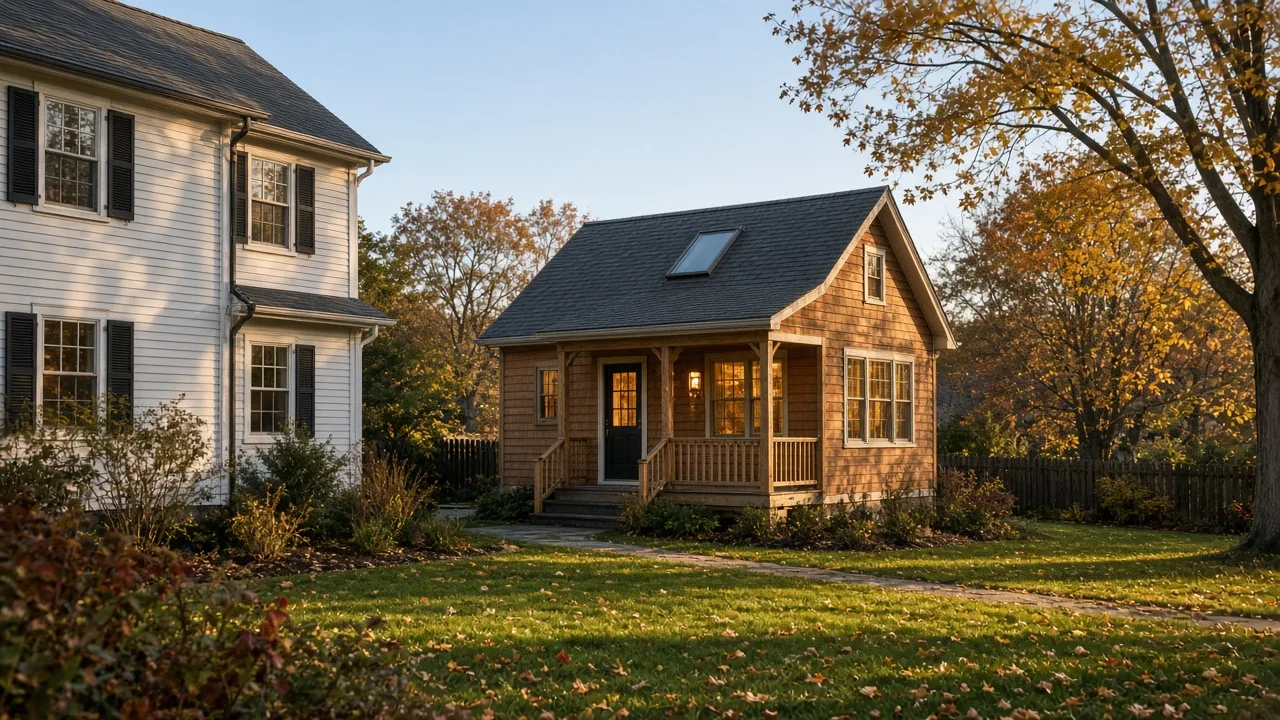
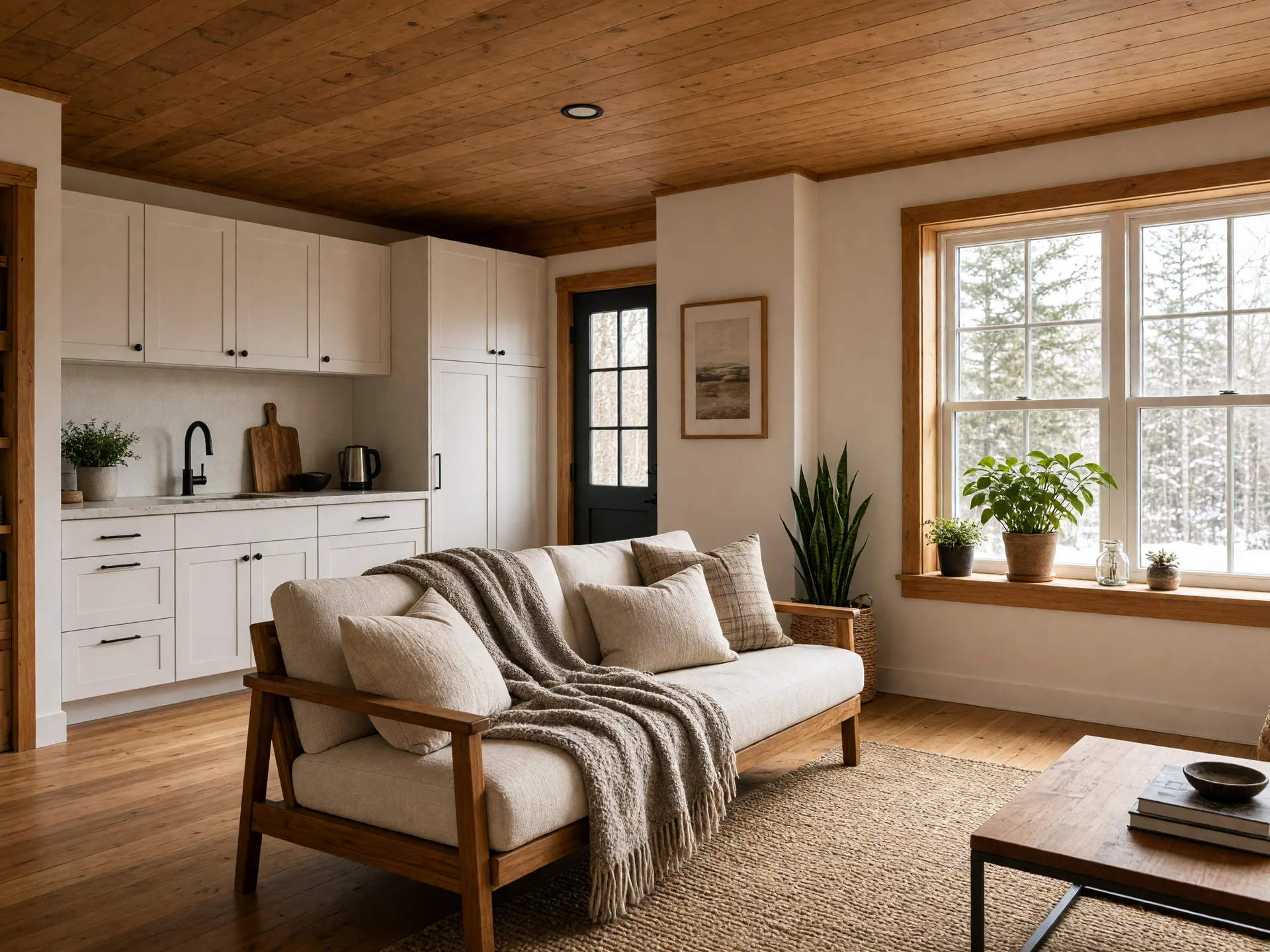
A small cedar-sided accessory dwelling with a gabled roof and skylight set in the backyard of a white clapboard New England home on a late-November afternoon. Alt: “A small cedar-sided accessory dwelling with a gabled roof and skylight set in the backyard of a white clapboard New England home on a late-November afternoon”. Secondary 4:3 image: a finished ADU above a garage in Central Massachusetts with a warm wood ceiling, white kitchenette, and winter light through a large window.
- Mass.gov: Accessory Dwelling Unit (ADU) FAQs (state rules, size limits, parking, owner-occupancy)
- Mass.gov: Accessory Dwelling Units Officially Allowed Statewide (February 2025)
- 760 CMR 71.00 final ADU regulations (EOHLC)
- EOHLC: Model Zoning for Accessory Dwelling Units
- Mass.gov: ADU applications surge statewide (1,600+ applications, 1,200+ permits in year one)
- City of Worcester: Revised ADU Ordinance (by right in all residential districts, no short-term rentals)
- MassHealthyAging: MassHousing launches ADU financing program (second mortgages up to $250,000)
- Banker & Tradesman: ADU financing seen as biggest obstacle
- WGBH: “Granny unit” law a strong start, but local rules cause delays and raise costs (May 2026)
- Realtor.com: most popular home feature per state (“mother-in-law” ranks highest in Massachusetts)
- 2026 ADU cost guides (Horizon ADU, Nationwide ADU) and Worcester County rental market estimates: planning ranges, not bids
State and local ADU rules were verified November 25, 2026 from Mass.gov, the EOHLC regulations and model zoning, and the City of Worcester. Cost and rent figures are 2026 published estimates that vary by site, contractor, and market, and should be confirmed with local professionals. This article is general education, not legal, tax, or financial advice. Confirm your deed, local ordinance, and financing with the right professionals before you build.