

Short answer: most sellers of a primary home in Massachusetts owe no capital gains tax at all, federally or to the state. The IRS and Massachusetts both exclude up to $250,000 of gain for a single filer and $500,000 for married couples filing jointly, as long as you owned and used the home as your main residence for at least two of the five years before the sale. Only the gain above those limits is taxable, and for the typical Worcester County or Middlesex County sale it rarely gets there. Here is how the rule works, how to count your gain honestly, and the two situations where I see sellers actually cut a check to the IRS.
Do I have to pay capital gains tax when I sell my house in Massachusetts?
The direct answer: for a primary home you have owned and lived in for at least two of the last five years, no, as long as your gain stays under $250,000 (single) or $500,000 (married filing jointly), and that exclusion applies to Massachusetts tax too, because Massachusetts follows the federal home-sale exclusion. If your gain goes above the limit, the excess is taxed federally at long-term capital gains rates of 0%, 15%, or 20% in 2026 (plus a 3.8% Medicare surtax for higher earners) and in Massachusetts at a 5% long-term rate, with a 4% surtax on the portion of income above roughly $1.1 million. For most Central Massachusetts sellers the honest math lands at zero owed; the work is in counting your gain correctly.
Why this question is everywhere right now
This is the question I hear from sellers almost every week, and November 2026 is a natural moment for it. Prices across Central Massachusetts have climbed for years, Worcester County’s single-family median sat at $525,000 in August and the city of Worcester at $471,000, both up from a year earlier, and homes bought ten or fifteen years ago at far lower numbers now carry gains that feel large. At the same time, the headlines around the 2025 federal tax law made a lot of homeowners wonder whether the old rules had changed, whether a new high rate was coming, or whether they should sell before some deadline. The honest answer is that the home-sale exclusion itself did not change, and that is worth knowing before you make any decision around taxes.
There is also real money at stake. The exclusion amount has not been raised since 1997, even though prices have roughly tripled in many Massachusetts towns. A couple who bought in the early 2000s and sells today in a hot Middlesex County community can have a gain of $400,000 or more, which is why the married-filing-jointly $500,000 limit matters and why single sellers are the ones who most often bump against the edge.
The rule in plain English: the 2-of-5-year test
The federal home-sale exclusion, IRS Section 121, is one of the most generous breaks in the tax code, and it is simpler than most people expect. You qualify when all of these are true:
- It is your main home. The exclusion applies to your principal residence, the place you actually live most of the time, not to a vacation home or a rental.
- You owned and lived in it for two of the last five years. The two years do not have to be consecutive, and the five-year window is measured back from the sale date, so a home you moved out of three years ago and have been renting can still qualify if you sell within five years.
- You have not used the exclusion in the past two years. It is available once every two years, which matters to people who move frequently.
When those tests are met, you exclude up to $250,000 of gain if you file single and up to $500,000 if you file married jointly. Gain is your sales price minus your selling costs, minus what you paid for the home plus the cost of capital improvements you made while you owned it. A sale at a loss gets no deduction, and a gain at or under the limit gets no tax, which for most of Central Massachusetts means the tax bill on a primary home sale is simply zero.
What Massachusetts does (and the surprise most sellers miss)
Here is the part that surprises people, because plenty of internet advice gets it wrong: Massachusetts follows the federal home-sale exclusion. If your gain is excluded federally, it is excluded from Massachusetts personal income tax too, up to the same $250,000 and $500,000 limits, per the Massachusetts Department of Revenue. You do not file a separate state form for a fully excluded sale in most cases, because there is no taxable gain to report.
Only when your gain exceeds the federal exclusion does Massachusetts tax the excess, and its rates are modest: long-term capital gains (assets held more than one year, which covers virtually every home sale) are taxed at 5%, and short-term gains at 8.5%. Above roughly $1.1 million of income, Massachusetts adds its 4% surtax, so the top combined Massachusetts rate on a home-sale gain is about 9%. Federal tax on the excess is a 0%, 15%, or 20% long-term rate depending on your taxable income in 2026, with the 3.8% Medicare surtax potentially adding on for higher-income filers. The exact bracket depends on all your other income, which is why your CPA runs the real numbers, but the pattern to internalize is: the first $250,000 or $500,000 is free, and the tax on anything above it is a slice, not the whole pie.
2026 federal capital gains thresholds come from the IRS (Revenue Procedure 2025-32) as published in the IRS update on 2026 capital gains brackets; Massachusetts rates from the Massachusetts Department of Revenue. These are facts about current law, not predictions.
Two worked examples from Central Massachusetts
Let’s make it concrete with the kind of sale I see across Worcester and Middlesex County. These are illustrations with rounded numbers to show the math, not appraisals or promises about your property.
Example one: a typical Worcester County sale, fully excluded
A couple buys a three-bedroom colonial in a Worcester suburb in 2013 for $310,000. Over the years they put $45,000 into documented improvements: a roof, a kitchen refresh, a new heating system. In November 2026 they sell for $525,000, near the county median, and pay about $33,000 in total selling costs including the agent commission. Their gain is $525,000 minus $33,000 in selling costs, minus their $355,000 adjusted basis, which comes to roughly $137,000. That sits far below the $500,000 joint exclusion, so they owe nothing to the IRS and nothing to Massachusetts, and there is no form to attach beyond reporting that the sale was fully excluded.
Example two: a single seller with a bigger gain, and a small tax
A single person bought a condo in a fast-appreciating Middlesex County town in 2004 for $240,000 and made $70,000 of documented improvements over the years. In 2026 it sells for $660,000 with $41,000 in selling costs. Their gain is $660,000 minus $41,000, minus their $310,000 adjusted basis, or about $309,000. The $250,000 single exclusion covers part of it, leaving roughly $59,000 of taxable gain. At a 15% federal rate that is about $8,850, and Massachusetts takes about $2,950 at 5%, so roughly $11,800 total on a $309,000 profit, and only if their other income lands them in the 15% bracket. Married instead of single, that same sale would have been fully excluded. That difference is exactly why it pays to run the numbers before you sell rather than after.
Both examples are illustrative and rounded. Selling costs, basis, and brackets vary by property and tax return; the figures assume long-term holding and no depreciation or rental use. Exact brackets depend on the seller’s full tax picture for 2026.
How to count your gain (and why receipts matter)
The single biggest mistake I see is sellers estimating their gain from the sales price alone. Your gain is the difference between two sides: what you realize from the sale, and what you have in the home. Every dollar of documented capital improvement raises your basis and lowers your taxable gain, which is why the folder of receipts is worth more than people think.
- Start with your purchase price and add settlement costs that were capital in nature, like title insurance and recording fees, from your original closing statement.
- Add capital improvements: work that adds value, prolongs useful life, or adapts the home to new use, such as a roof, furnace, siding, finished basement, added bathroom, or major kitchen update. Repairs and routine maintenance, like a coat of paint or a fixed leak, do not count.
- Subtract depreciation you may have claimed if you used part of the home for business, and any insurance proceeds for damage. Depreciation lowers your basis, so a home office or rental use changes the math and is worth a conversation with a tax professional before you close.
- Reduce the sale proceeds by selling costs such as the agent commission and other seller-paid closing costs, then subtract your adjusted basis. The result is your gain.
Keep the purchase closing statement, improvement receipts with dates and descriptions, and the sale closing statement together. If you are selling years from now, that folder is what turns a guess into a precise number.
When you can sell early and still claim part of the exclusion
Life does not always give you two full years. If you sell before the two-year mark because of a change in place of employment, a health problem, or an unforeseen circumstance, you can still claim a partial exclusion based on how long you lived in the home. The IRS defines the three categories in Publication 523: a job-related move that makes your new commute at least 50 miles farther, health reasons such as needing care or a medical condition, and unforeseen circumstances such as divorce, unemployment that forces a move, or multiple births from a single pregnancy. In those cases the $250,000 and $500,000 limits shrink proportionally to your months of ownership and use, so even nine months in the home can give you part of the protection. This is a common path for people transferred into or out of Central Massachusetts, and a good reason to keep your CPA in the conversation early.
What does not get the exclusion
The rules change the moment a home is not your primary residence. A second home or vacation property, a rental, and a property you fixed up and sold for profit within two years do not qualify for the Section 121 exclusion. Investors and flippers instead look at different tools, like a 1031 exchange for investment property, and their gains are taxed on the full amount, which is why rental and flip math is a separate conversation from a primary home sale. If you are weighing whether a Worcester-area property works better as a rental than a sale, my investor guide walks through the numbers, because the tax treatment is one of the first things that changes.
Two more honest notes. If you owned and lived in the home for less than two years and none of the partial-exclusion situations apply, the whole gain is taxable, so the two-year clock is a real planning number for anyone who might move again soon. And if you sell at a loss, you cannot deduct that loss on a personal residence; the tax code gives you the exclusion on the way up and nothing on the way down, so the loss is simply not a factor you can harvest.
What the 2025 tax law changed (and what it did not)
The One Big Beautiful Bill Act, signed into law in July 2025, made several things permanent and left the home-sale exclusion exactly where it was. The facts, as verified in November 2026:
- The $250,000 and $500,000 exclusion amounts are unchanged. The law did not raise them, and the proposed “More Homes on the Market Act” that would double the exclusion to $500,000 and $1,000,000 has not passed. Please do not plan around a bill that is not law.
- The 0%, 15%, and 20% long-term capital gains brackets were made permanent rather than reverting to an older, higher schedule after 2025, with the 2026 thresholds indexed for inflation ($49,450 for the 0% bracket for single filers, $98,900 married filing jointly).
- There is no new 33% or 28% bracket on home-sale gains for high earners in 2026. Headlines during the legislative process floated much higher top rates on investment gains; the enacted law kept the familiar structure. High-income sellers still face the 3.8% Medicare surtax above $200,000 ($250,000 married) of adjusted gross income, which can push the top effective rate to 23.8%.
- Stepped-up basis for inherited homes was preserved. If you inherit a home, your basis is generally its value at the time of the prior owner’s death, which keeps most inherited-home sales comfortably inside the exclusion.
[JULIA LOCAL INSIGHT] The sellers I meet across Worcester and Middlesex County almost always learn two things the first time we run the numbers: nearly all of them are fully inside the exclusion, and the handful who are not usually owe far less than they braced for. The single best habit is keeping the folder: original closing statement, every improvement receipt, and the sale closing statement. It turns a worry into a number you can plan around, and it is one more way I help my clients protect what their home has built for them.
Your next three steps
- Assemble the paper trail now, before you list. Find your purchase closing statement and gather receipts for major work: roof, heating, kitchen, baths, additions. If anything is missing, most contractors and town records can help you reconstruct it, and this is far easier before the sale than six months after.
- Run a rough gain with today’s realistic numbers. Use the current median context plus a comparable-sales estimate from your agent to see where a likely sale price lands against your adjusted basis. If your rough gain is under the exclusion for your filing status, you can move forward knowing the tax side is, in most cases, handled; if you are near or above it, that is a planning conversation, not a panic.
- Talk to a CPA or Enrolled Agent before you sign. The exclusion is simple; your full tax picture is not. A tax professional can confirm your gain, handle depreciation or partial-year situations, and coordinate the timing with your other income. I work alongside your accountant, not instead of them, and I will happily connect you with professionals my clients have trusted.
A note on fairness: I work with every buyer and seller within Fair Housing law and never steer anyone toward or away from any neighborhood, school, or community. The right home and the right timing are your choices, made with full information, and my job is to make sure you have it.
If you are a homeowner in Worcester County or Middlesex County wondering what a sale would really put in your pocket, let’s run the numbers together. I will give you a realistic price range, honest advice on tax questions to raise with your CPA, and a clear picture of your next step, whether that is selling now, waiting, or exploring your options. Reach out any time; I am here to help.
Do You Owe Capital Gains Tax When Selling Your Home in Massachusetts?
/blog/capital-gains-tax-selling-home-massachusetts/
capital gains tax when selling a house in Massachusetts
do I have to pay capital gains tax when I sell my house, home sale exclusion 250k 500k, Massachusetts capital gains tax home sale 2026, section 121 exclusion Massachusetts, how to avoid capital gains tax on home sale, tax on selling a second home, Massachusetts capital gains tax rates
November 4, 2026 / November 4, 2026
Wondering if you will owe tax when you sell your Massachusetts home? For most sellers, no: both the IRS and Massachusetts exclude up to $250K of gain ($500K for couples) on a primary home. My new post explains the 2-of-5-year rule, how to count your gain, and two worked examples for Central Massachusetts sellers. Read it, then let us run your numbers.
Latest Weekly Market Update, Should I Sell My House If I Have a Low Mortgage Rate?, Is Fall a Good Time to Sell?, When Is the Right Time to Sell?, Does Downsizing Actually Save You Money?, Is Worcester Good for Rental Investing?
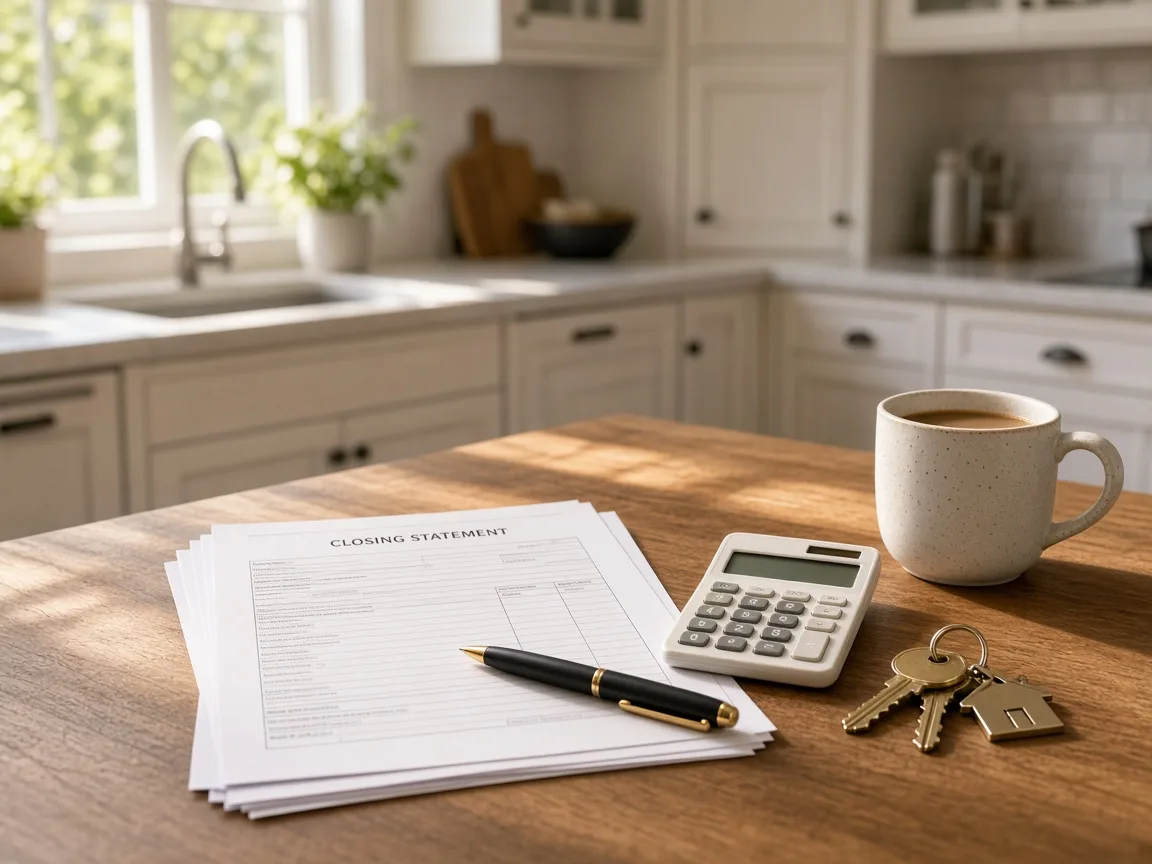
A crisp November photograph of a classic white clapboard New England colonial home in Central Massachusetts, golden light on the facade and autumn leaves on the lawn. Alt: “A classic white clapboard New England colonial home in Central Massachusetts on a clear November morning, golden light on the facade and autumn leaves scattered on the lawn”. Secondary 4:3 image: home-sale papers, calculator, and keys on a kitchen island in warm morning light.
- IRS Publication 523: Selling Your Home (Section 121 exclusion, partial exclusion rules)
- IRS Topic No. 701: Sale of Home
- Massachusetts Department of Revenue: Massachusetts Tax Rates (2026 capital gains rates, 4% surtax threshold)
- Massachusetts DOR: Differences Between MA and Federal Tax Law for Personal Income (home-sale exclusion conformity)
- Massachusetts FY26 Tax Expenditure Budget 1.021: Exemption of Capital Gains on Home Sales
- Kiplinger: IRS updates capital gains tax thresholds for 2026
- CNBC: IRS unveils higher capital gains tax brackets for 2026
- Katten: The One Big Beautiful Bill Act and year-end tax changes (permanent capital gains brackets, Section 121 unchanged)
- Massachusetts Association of REALTORS: August 2026 Worcester County and Worcester city single-family median price data
Federal and Massachusetts tax rules were verified November 4, 2026, from the IRS, the Massachusetts Department of Revenue, and published analysis of the One Big Beautiful Bill Act. Example figures are illustrative and rounded; your gain and brackets depend on your purchase history, improvements, filing status, and full 2026 tax picture. This article is general education, not tax, legal, or financial advice. Always confirm your situation with a licensed tax professional before closing.