
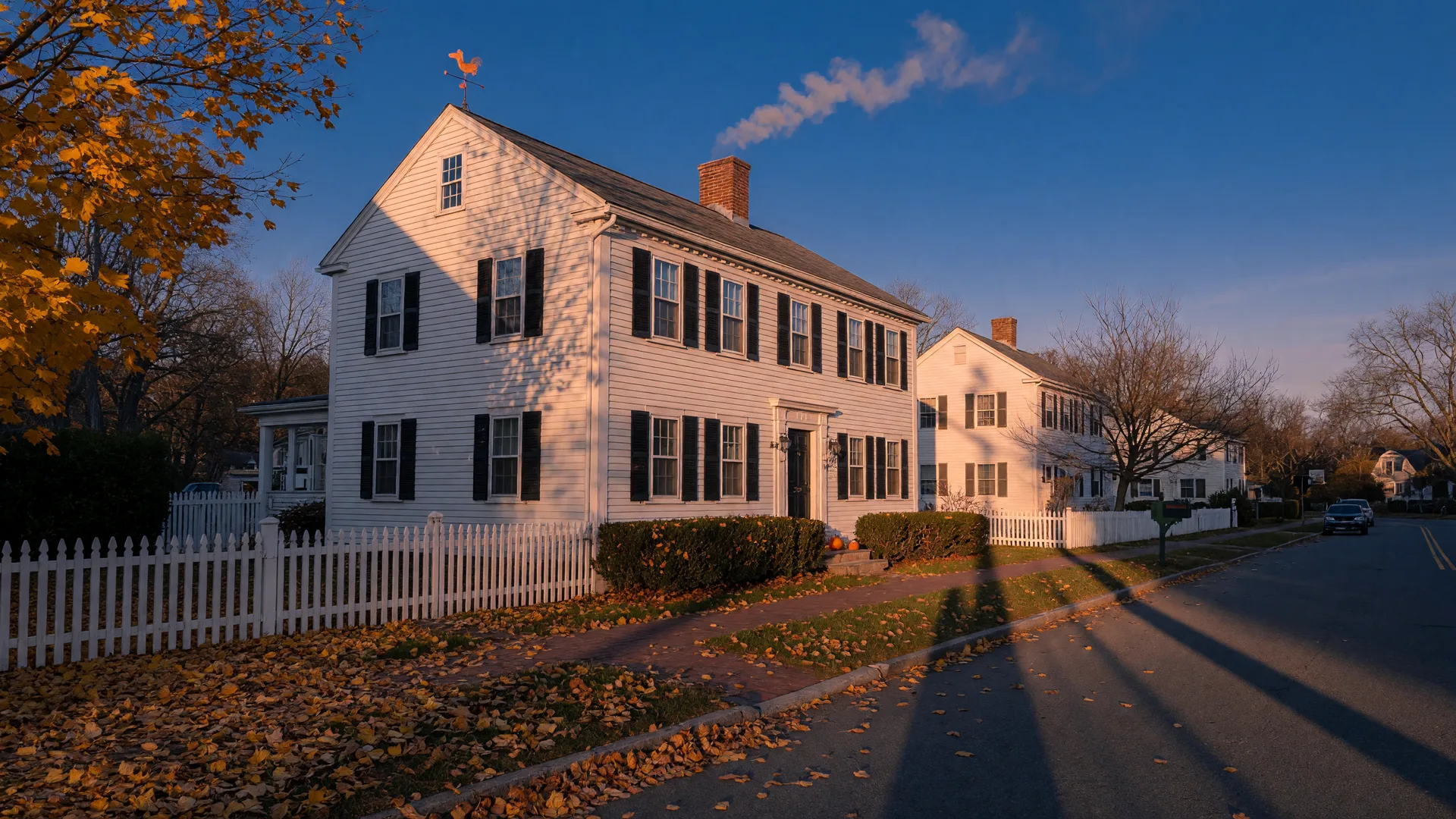
Short answer: for many Massachusetts buyers, yes. Winter is historically the season with the least competition, the most motivated sellers, and prices that run below the spring peak, so a well-prepared buyer can find real value in Worcester and Middlesex Counties between now and the spring market. But it has honest trade-offs, less inventory, shorter days, and a snow-covered roof that can hide problems, and in October 2026 mortgage rates are the highest they have been in three years. Here is what the season really means for your search.
Is it actually cheaper to buy a house in the winter in Massachusetts?
Historically, yes on price and competition, no on selection. Industry analyses of Massachusetts sales data consistently show winter closings running several percent below the May and June peak, with fewer buyers bidding on each home and a larger share of homes selling below list price. December and January are also the months with the fewest new listings of the year, so you typically pay less but choose from less. Combine that with 2026 conditions, where buyers already hold unusual leverage in the form of seller concessions, and winter shapes up as a strong season for a prepared buyer, not a season that hands you a bargain on its own.
Why this question is everywhere right now
“Best time to buy a house in Massachusetts” is one of the most searched real estate questions in the state, and every year it peaks right about now, when the leaves fall and buyers wonder whether to push ahead or wait for spring. This year the question carries extra weight because the numbers have shifted. The 30-year fixed mortgage rate averaged 7.40% in the week ending October 15, 2026, per Freddie Mac, the highest since November 2023, and the elevated rate is changing how sellers behave.
Across Massachusetts, inventory keeps growing. Active listings hit a record 8,495 statewide in the third quarter, up 27% year over year, and more of those homes are sitting long enough to invite negotiation. A growing share of sales now includes seller concessions such as closing-cost credits, price adjustments, or rate buydowns, roughly 44% nationally according to industry reporting, and buyers in Greater Boston are walking away from signed agreements at the highest rate in years. I unpacked the week’s numbers in my October 14 market update. The short version: the balance of power in Massachusetts home shopping, for the first time in years, has swung at least partway toward the buyer, and winter is when buyer leverage tends to be strongest.
What winter does to price and competition
Let’s start with the seasonal pattern, because it is real but it is also a pattern, not a promise. In a normal year, Massachusetts sees the biggest crowds of buyers in May and June, when families want to close before the school year and inventory is at its highest. Winter is the mirror image. Buyer traffic thins out dramatically, holiday schedules and cold weather sideline casual shoppers, and the buyers who remain are usually serious, relocating for a job, on a lease timeline, or simply ready now.
With fewer buyers comes more negotiation room. Homes that have lingered since the fall are often priced to move by January, and sellers in winter are, on average, more willing to consider price adjustments, closing-cost help, or flexible closing dates. Across Massachusetts, winter closings have historically run roughly 5% below the summer peak; one widely cited analysis pegged a home that might fetch about $650,000 in May closing closer to $612,500 in the depths of winter. Those figures are seasonal history, not today’s guarantee for any specific house, but they explain why agents who work this market every year tend to tell their buyer clients, when you are ready, winter is a fine time to be looking.
The seller side behaves the same way. In my fall selling guide I noted that anyone listing after the holidays is choosing a thinner field too, so the buyer who shops in January is often the only serious offer a seller has. That is a leverage you rarely get in April.
What a winter walkthrough reveals that a summer one cannot
Here is the part that makes winter house hunting genuinely useful rather than just cheaper: a cold house tells the truth. In January you feel the draft under the front door, notice whether the second floor holds heat, and hear whether the furnace kicks on constantly or rests comfortably. You can ask for 12 months of heating bills and read them like a road map of the home’s insulation. Roof overhangs show ice dams or staining, gutters that back up are obvious, and a dry basement in early March, after weeks of snow melt and rain, tells you more than the same basement in July. Many buyers who shop in winter end up with a better house, not just a better price, because they saw the property under stress.
Massachusetts law backs you up here. Since October 15, 2025, under the state’s home inspection law, sellers and their agents may not require, encourage, or condition an offer on waiving a home inspection, and sellers must provide a written Massachusetts Residential Home Inspection Disclosure. You get an inspection window, and you should use it. If you are buying an older New England home, and much of Worcester County’s housing stock is just that, hire an inspector who knows how to read a 1900s foundation and a 50-year-old heating system.
One honest caveat: snow also hides things. Roofs, siding, foundations, and exterior drainage can be partially buried, and an inspector typically cannot test central air, irrigation, or a pool in freezing weather. Ask for the seller’s disclosure and maintenance records on those systems, and if a heavy snow is on the ground for your inspection, ask your inspector what they could not see and schedule a follow-up look in spring if it matters to your offer.
The honest downsides of buying in winter
I want to be straight with you, because the season cuts both ways. The biggest drawback is inventory. December is typically the low point for new listings in Massachusetts, so your pool of homes is smaller, and in a market like Middlesex County, where median prices run well above Worcester County, waiting through winter can mean watching the best homes go to spring buyers who were faster. Less daylight means fewer after-work showings, snowstorms can delay inspections and closings, and the holidays slow every step of a transaction from title work to movers. Winter moves also cost more: movers in demand in snow, plow services before you close, and a very unpleasant day hauling boxes through ice.
And curb appeal is honest about its limits in February. A house with beautiful gardens and a new driveway looks identical to one with a crumbling one under snow, so you need the inspection and the disclosure to do more work than your eyes. That is manageable. It is just work, and you should go in aware of it.
How the 2026 rate environment changes the winter math
Now the part that makes “wait for spring” a weaker argument this year than most. Rates are not waiting with you. At 7.40% as of mid-October, the 30-year fixed average is at a three-year high, and the October forecast from Fannie Mae, labeled clearly as a forecast and not a promise, projects the 30-year averaging about 7.4% through the fourth quarter of 2026 and near 7.5% through 2027. The Mortgage Reports and other industry trackers hold similar views. If that outlook is right, the spring market does not bring rate relief, it brings the same rates with more buyers competing for the same homes.
To see what rates do to a payment, borrow $400,000 at 7.40% and principal and interest run about $2,770 a month, roughly $1,080 more than the same loan at 3%. That gap is why so many homeowners feel locked in, which I wrote about in Should I Sell with a Low Mortgage Rate?, and it is also why seller concessions like rate buydowns matter so much right now. A 2-1 buydown or a closing-cost credit can cut the effective rate on your first years, and in a winter negotiation, sellers are far more likely to say yes to those terms than in a spring bidding war.
The statewide numbers reflect a market that is rebalancing in the buyer’s favor. Massachusetts Association of REALTORS data for September shows the single-family median price up 2.4% year over year to $670,000, with condos flat at $525,000, and recent reporting pegs the statewide median around $738,305, up 2.5%. Prices are still firm, but the era of waived inspections and 20 offers a weekend is not the market we are in. Buyers who stay organized, get pre-approved, and move when the right home appears have genuine advantages this winter.
[JULIA LOCAL INSIGHT] The buyers I have worked with this fall are not sitting out because they are afraid of rates. They are sitting out because they are waiting for certainty that does not exist yet. Winter is the season where buyer leverage is highest in this market, and I tell my clients the best strategy is not waiting for a perfect moment, it is being ready the moment a good home appears, pre-approval in hand, numbers run, town list clear. Worcester County and Middlesex County are full of good homes that will sell for less attention this winter than they will in April.
A winter buyer’s checklist for Worcester and Middlesex County
- Get pre-approved before you tour. Winter sellers are typically motivated, and a buyer with a clean pre-approval letter can negotiate a price adjustment or concession that a “pre-qualified” buyer cannot. Ask your lender about rate buydowns and what a temporary 2-1 buydown would cost.
- Know the towns on your list. Across Worcester and Middlesex Counties you will find very different price points, commutes, and housing styles: classic Victorians and ranch homes in Worcester’s neighborhoods, family suburbs like Shrewsbury, Holden, Westborough, and Grafton, and commuter towns along Routes 9, 20, 290, and 495 such as Hudson and Marlborough. Build your list around the factors that matter to you, schools, commute time, and lifestyle, and I will never steer you for any reason other than your stated priorities.
- Request 12 months of utility bills on every home you seriously consider. A $400 oil fill, electric heat, or an aging boiler changes the real monthly cost of a house, and in winter the bills are sitting right there to read.
- Budget for the season itself. Heating the new place before you move in, snow removal, and a winter inspection fee are real line items. Build them into your closing cost picture and you will not be surprised in January.
- Plan the inspection like a New Englander. Book it on a mild day if you can, ask what snow is hiding, and use the state’s inspection window properly. Review my seasonal maintenance checklist to see what winter upkeep each system will demand of you after closing.
Your next three steps
- Talk to a lender this week. Pre-approval takes a few days and instantly tells you the price range, down payment, and monthly payment that are real for you. Combine it with my down payment guide and the overview of how buyer agent compensation works in 2026, and you will know the full picture before seeing a single house.
- Build the real monthly cost of each candidate home. Mortgage, property taxes (I break down Worcester’s rates here), insurance, heating, and maintenance. A slightly cheaper house with a 30-year-old furnace is rarely cheaper at all.
- Set your winter search up with an agent who works it. I want to be that person for you. Together we will set up your search, flag the homes that have been sitting longest, and walk into every negotiation ready to ask for the terms that make your payment work.
A note on fairness: I work with every buyer within Fair Housing law, and I never steer anyone toward or away from any neighborhood, school, or community. The right town for you is the one you choose with full information about what each option offers.
If you are thinking about buying this winter in Worcester County or Middlesex County, let’s talk. I will help you compare communities on the factors that matter to you, run the real numbers, and put together a plan that treats your budget with respect. Winter is a wonderful time to find your home, and I would love to help you do it well. Reach out any time.
is winter a good time to buy a house in Massachusetts
best time to buy a house in Massachusetts, buying a house in winter pros and cons, should I buy now or wait for mortgage rates, winter home inspection Massachusetts, Massachusetts housing market October 2026, house hunting in winter New England, first time home buyer winter 2026
October 21, 2026 / October 21, 2026
Winter is often the best time to buy a home in Massachusetts, and this year the leverage leans even further toward buyers. My new post covers how seasonality affects price, what a cold-weather walkthrough really reveals, and the 2026 rate math behind the decision to buy now or wait. Read it on the blog, and reach out if you want to plan your winter search.
- Freddie Mac Primary Mortgage Market Survey (30-year fixed rate, week ending October 15, 2026)
- Fannie Mae Housing Forecast, October 2026 (forecast, labeled as such)
- Boston.com: Expert tips on buying and selling a home in winter
- Redfin: The benefits of buying a home in the off-season
- Houzeo: Best time to buy a house in Massachusetts (seasonal price analysis)
- Mass.gov (EOHLC): Residential home inspections, 760 CMR 74.00
- Massachusetts Association of REALTORS: Home inspection regulations
- Boston Agent Magazine: MAR September 2026 market data (single-family median $670,000, condos $525,000)
- Patch: Massachusetts statewide median $738,305, up 2.5% (October 13, 2026)
- Banker & Tradesman: Greater Boston sale cancellations up 12.4% year over year (October 18, 2026)
- TheStreet: Share of sales involving seller concessions, including buydowns
Mortgage rates and market figures were verified October 21, 2026. Seasonal pricing and competition figures are historical patterns drawn from the sources above and are not a guarantee for any individual home. Fannie Mae projections are a forecast, an opinion about the future, not a promise. Example payment math is illustrative, principal and interest only, for a $400,000 loan at 7.40% over 30 years. Nothing here is financial, tax, or legal advice.