
Short answer: for most first-time buyers in Worcester and Middlesex County, waiting for mortgage rates to drop has not paid off so far in 2026, and the latest forecasts do not promise relief anytime soon. The 30-year fixed rate averaged 7.40% in the week ending October 15, 2026, according to Freddie Mac, roughly a full point above the early-2026 low near 5.98%, and Fannie Mae’s October 2026 forecast, clearly labeled a forecast and not a promise, projects the rate staying near 7.4% through the end of 2026 and close to 7.5% in 2027. The decision you are really making is not about the rate ticker at all; it is about whether you can afford the monthly payment on a home you want today, and in this market that payment comes with more negotiation room than buyers have had in years. Here is how to think about it with real numbers.
Should I wait to buy a house until mortgage rates drop?
The direct answer: treat a rate drop as a bonus, not a plan. Waiting has already cost 2026 buyers about a full percentage point, since rates fell near 5.98% in February and then climbed to 7.40% by mid-October, and in much of Worcester County prices have kept climbing alongside them. If you can afford the payment on a home you genuinely want at today’s rate, the stronger move is usually to buy when the right home appears and refinance if and when rates fall later. Holding off makes sense when your income, job, or plans are genuinely uncertain, or when a few more months of saving meaningfully changes the loan you qualify for, not when you are simply hoping the market moves in your favor.
Why this question is everywhere right now
Whenever the rate line climbs, this is the question every buyer asks, and October 2026 is one of those moments. The 30-year fixed rate has been at or near 7.40% for two straight weeks, the highest reading since late 2023, after seven consecutive weekly increases that followed the Federal Reserve’s September rate hike. A year ago the same survey average was 6.27%, so the jump has been fast, and the headlines make it feel like you should freeze until the numbers get friendlier.
The complicating factor is that the national story and the Central Massachusetts story are pulling in opposite directions. Nationally, Redfin’s Housing Market Tracker, published October 15, reports a record 22% of active U.S. listings carrying price reductions, pending sales down 12.7% from a year earlier, and 41 of the 50 largest metros now favoring buyers. Here at home, Realtor.com’s 2026 forecast, again a forecast and not a guarantee, still ranks the Worcester metro the number three housing market in the country, projecting about 12.6% home-sale growth this year. So buyers see national headlines saying leverage is swinging their way, while local news says Worcester is one of the hottest markets in the U.S. No wonder the question of waiting feels urgent.
What 2026 taught us about rate forecasts
Let’s be honest about what happened this year, because it should shape how much faith you put in any forecast. At the start of 2026, the consensus among major forecasters was that rates would fall. Fannie Mae’s September 2025 forecast projected the 30-year fixed rate near 5.9% by the end of 2026, and Bankrate and others thought it could dip below 6%, possibly to 5.5%. Instead, rates bottomed near 5.98% in February, then turned and climbed steadily to 7.40% by October, driven by inflation worries, global uncertainty, and the Fed’s September hike.
Forecasters have since revised sharply upward. Fannie Mae’s October 2026 Housing Forecast now puts the 30-year rate near 7.4% in the fourth quarter of 2026 and close to 7.5% through 2027, and the Mortgage Bankers Association has raised its outlook as well, with most economists expecting rates to stay in the mid-6% to mid-7% range for the foreseeable future rather than returning to the 5% or low-6% territory people hoped for. None of these are promises, and rates could surprise us in either direction, which is exactly the point: if you build your home purchase around a forecast, you are betting on someone’s opinion, and this year proved how quickly those opinions move.
Every rate projection in this post is an opinion about the future, not a guarantee. Verified rate history comes from the Freddie Mac Primary Mortgage Market Survey; current forecasts are labeled as such throughout.
What waiting actually costs: the math
Let’s put numbers on the decision. Borrow $400,000 on a 30-year fixed loan and compare February’s low with today’s average:
The gap is about $372 a month per $400,000 borrowed, and over 30 years the higher-rate example costs roughly $134,000 more in interest. That is real money, and it is the strongest argument for waiting. But it is only half the equation, and this is where the waiting argument usually falls apart for first-time buyers.
Example figures are principal and interest only, computed at a 30-year fixed rate for an illustrative $400,000 loan. Taxes, insurance, and PMI add to both sides, and your quote will differ. Interest totals are rounded. These are arithmetic examples, not a lender quote.
The half of the story the comparison leaves out
The rate comparison assumes prices stand still while you wait. In Central Massachusetts they have not. The freshest county figures from the Massachusetts Association of REALTORS show Worcester County’s single-family median at $525,000 in August, up 2.4% year over year, and the city of Worcester’s median at $471,000, up 8.3%. Middlesex County’s August median was $847,165, up 2.1%. Statewide, the September median of $670,000 rose 2.4% year over year even with closed sales up 4.8%, which tells you demand is still real at these rates.
Do that arithmetic forward, carefully and as an illustration, not a prediction: if Worcester’s $471,000 median kept appreciating at a mid-single-digit annual pace, a year of waiting could add $20,000 or more to the price of the same home, which is roughly what your $372-a-month rate savings buys back over a year of extra payments on a smaller loan, if the rates even drop by the amount you are hoping. Most first-time buyers I work with who run this comparison discover that waiting to save on the rate can cost them more on the price, and they also keep paying rent in the meantime, with nothing building equity.
What the market is actually doing here this October
Here is the local picture as of late October 2026, pulled from my most recent weekly market update. Worcester County’s August single-family median was $525,000, up 2.4% year over year across 595 sales, with days on market of 41, up from 34 a year earlier. Inside the county, the city of Worcester remains the tightest pocket: its median rose 8.3% to $471,000 while city inventory fell 16.8% to roughly 144 single-family listings, about two months of supply. Middlesex County was steadier at $847,165, up 2.1%. The statewide median climbed 2.4% to $670,000 in September, so Central Massachusetts is not seeing price declines; it is seeing prices pause and, in the hottest towns, keep climbing.
At the same time, inventory is genuinely improving for buyers. Active listings are up in both counties, more homes are sitting longer, and nationally a record share of sellers are cutting asking prices and offering concessions. In practical terms, that means today’s buyer can often negotiate in ways that barely existed a year ago: a closing-cost credit, a seller-paid rate buydown, a more flexible closing date. Those tools cut your actual payment today, which is worth more to you right now than a forecast that might not arrive.
Why “wait for the market to crash” is a risky bet here
Every few years, someone confidently predicts a big price drop, and in Central Massachusetts it has not shown up on any timetable people actually bet on. The reasons are structural: decades of underbuilding relative to demand, stubbornly low inventory in desirable towns, and a steady stream of buyers priced out of Greater Boston moving west toward Worcester, Marlborough, Hudson, and the 495 corridor for homes that cost less but still appreciate. Realtor.com’s 2026 ranking of Worcester as a top-three U.S. market is a forecast, and I say that plainly, but it reflects the same demand pressures I see in my own business every week.
None of this is a guarantee, and I am not telling you prices cannot ever dip, because nobody knows. What I am telling you is that a crash is itself a forecast, and it is not the forecast any major source we track is making. If you wait for a price drop that does not come, you have paid years of rent and locked yourself out of years of equity; that is a real and common outcome, and it deserves as much weight in your decision as the rate chart does. My guide to buying in winter explains why the season ahead can actually be one of the better windows for a patient, prepared buyer who wants less competition rather than a lower ticker.
The case for buying now: lock the price, refinance the rate
Here is the framing that settled it for most of my recent first-time buyers: you cannot control mortgage rates, but you can control whether you are in the market when the right home appears and before more competition arrives. When rates eventually fall, you refinance, just as millions of homeowners did in 2020 and 2021. You cannot refinance your way into the house you never bought because you were waiting for a lower number.
Buying now has three specific levers you should know about:
- Seller concessions are on the table. In a market with rising inventory, you can often ask the seller to cover closing costs or credit you toward a temporary rate buydown, and a well-negotiated buydown can cut your payment for the first year or two, which is exactly when cash is tightest. Ask your lender what a 2-1 buydown would cost and who can pay for it.
- First-time buyer programs can shrink the hurdle. Massachusetts programs including MassHousing’s down payment assistance, MassDREAMS, and ONE Mortgage exist to get qualified buyers in with less cash up front. I walk through the real down payment range and these programs in my 2026 down payment guide, because most buyers discover they need far less than the 20% they assumed.
- You build equity from day one. Every payment you make in a home you own builds something for you. Every month of rent you pay while waiting builds something for your landlord, at prices that have been climbing across the region.
And before you write an offer, understand how buyer agency works in 2026, including who pays your agent, because that conversation changes the math on your available cash. My guide to buyer representation in Massachusetts covers it in plain English.
When waiting genuinely makes sense
I want to be straight with you, because a good agent does not cheer you into a purchase you are not ready for. Waiting is the right call when any of these is true:
- Your job or income is uncertain. Buy when your income feels durable, not when you are hoping it will be. A layoff with a new mortgage is the most expensive version of this decision.
- You may move within about three to five years. Buying and selling has real costs, and a short timeline can erase the equity you build. If a job relocation might come, wait until the picture is clearer.
- A few more months of saving changes your loan. If you are close to a larger down payment, lower debt-to-income, or a reserve fund that makes you a stronger buyer, those are concrete benefits, not guesses about the market.
- You are not sure which town or which kind of home fits. Renting in the area for a year while you learn commutes, schools by reputation and research, and neighborhoods is a legitimate strategy, not a failure. My commute guide and the community pages on this site are good starting points for that homework.
What is not on the list is “the rate will probably drop, so I will wait,” because this year is the proof that the market does not owe you that. If the payment fits your life today, the rate on your loan is a line item you can improve later; the home itself is the part you cannot wait for forever.
A simple way to decide
Strip away the headlines and make the decision on three numbers. First, the price of the home you want in the town you want, based on what similar homes actually sell for, not what they list for. Second, your monthly payment on that home at today’s rate, including property taxes, insurance, and a realistic allowance for utilities and upkeep; my guide to the real cost of homeownership shows the line items first-timers forget. Third, the monthly payment you can carry comfortably.
If number two fits inside number three, the answer is usually to move when the right home appears, using today’s concession market to make the deal work and refinancing if rates ever fall. If number two does not fit, then the question is not whether to wait for rates; it is whether a lower-priced town, a smaller home, seller-paid concessions, or a first-time buyer program can close the gap. That is a conversation worth having with a lender and an agent who will give you straight answers.
[JULIA LOCAL INSIGHT] The buyers I have been working with across Worcester and Middlesex County who feel stuck on the rate question usually relax once we separate two numbers: what they would pay to own something today, and what they would pay to own the same thing a year from now. Rates get the headlines, but price, terms, and time in the market decide most of the outcome. If the payment fits, the best day to buy is usually the day the right house comes along, and I would rather help you negotiate a seller concession that lowers your payment than watch a forecast that may never arrive.
Your next three steps
- Get pre-approved this week. It costs nothing with most lenders, takes the guesswork out of your budget, and tells you exactly what payment you qualify for at today’s rate. It also makes you a serious buyer the moment the right home lists, and pre-approval is step one no matter which way the rate goes.
- Build the true monthly cost of homes you actually want. Do not compare rates in the abstract; compare the full payment on real properties: mortgage, property taxes, insurance, heating, and maintenance. That single number is what your life will experience.
- Ask your lender to show you both scenarios side by side. Have them run your payment at today’s 7.40% and at a hypothetical 6%, then decide what a $372-a-month difference per $400,000 is really worth against the price you might pay a year from now. Bring me the numbers and I will help you weigh them honestly, including which towns give you the most home for the payment.
A note on fairness: I work with every buyer within Fair Housing law and never steer anyone toward or away from any neighborhood, school, or community. The right place to buy is the place you choose with full information, and my job is to give you that information.
If you are a first-time buyer in Worcester County or Middlesex County asking yourself “should I buy now or wait?”, let’s run your real numbers together. I will listen to your situation first, connect you with lenders who explain things clearly, and help you decide on facts instead of headlines, whether that decision is buy now, save a little longer, or start with a plan for next spring. Reach out any time; I am here to help.
Should I Wait to Buy a House Until Mortgage Rates Drop?
/blog/should-i-wait-to-buy-until-mortgage-rates-drop/
should I wait to buy a house until mortgage rates drop
will mortgage rates drop in 2026, buy now or wait for rates to drop, is it a bad time to buy a house with high interest rates, mortgage rate forecast October 2026, first-time home buyer Worcester MA, home prices in Worcester County 2026, should first-time buyers wait for rates to fall
October 28, 2026 / October 28, 2026
Wondering if you should wait for mortgage rates to drop before buying? Rates hit 7.40% this month after the 2026 forecasts everyone hoped for flipped upside down. My new post breaks down what waiting actually costs first-time buyers in Worcester and Middlesex County, with real numbers and an honest decision framework. Read it, then message me to run your own numbers.
Latest Weekly Market Update, 2026 Down Payment Guide, Is Winter a Good Time to Buy?, Do Buyers Pay Their Agent in MA?, The Real Cost of Homeownership, Worcester to Boston Commute Guide
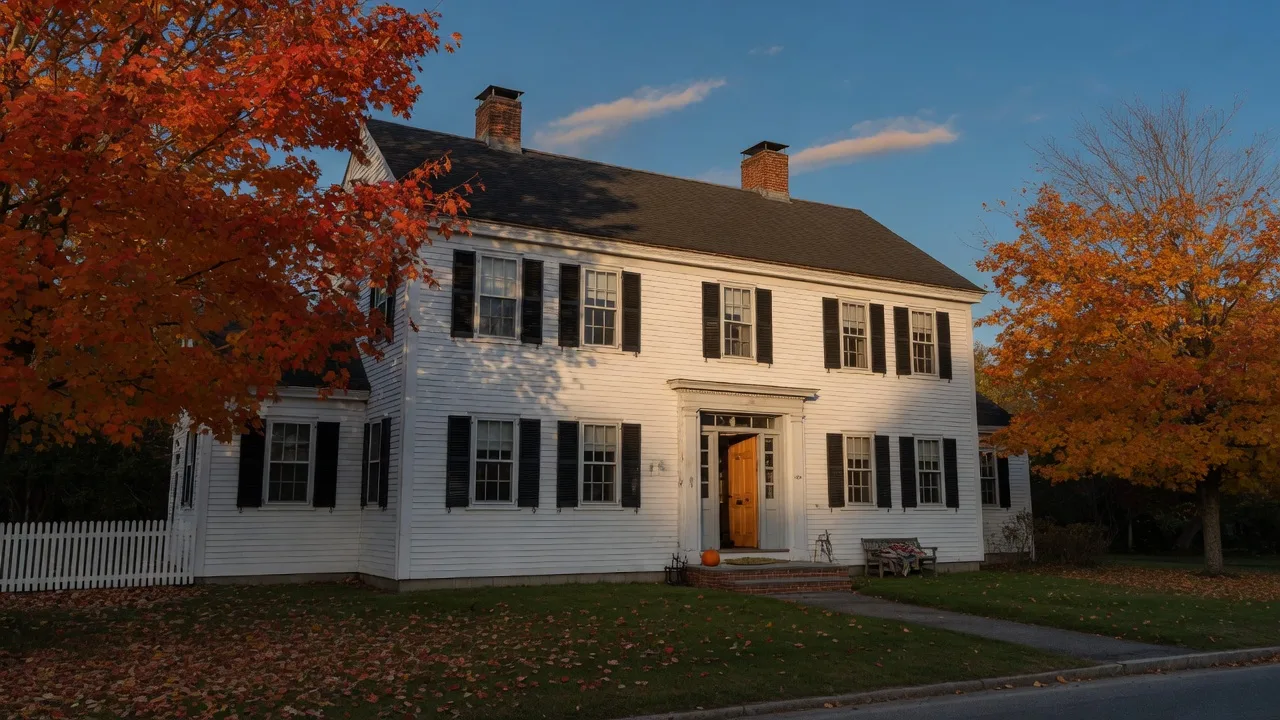
A classic white clapboard New England colonial home on a late-October afternoon, front door open with warm light spilling onto the porch, autumn maples framing the yard. Alt: “A classic New England colonial home in Central Massachusetts in late autumn, warm light spilling from an open front door”.
- Freddie Mac Primary Mortgage Market Survey (30-year fixed rate, week ending October 15, 2026)
- Fannie Mae Housing Forecast, October 2026 (forecast, labeled as such)
- TheStreet: Fannie Mae updates its mortgage rate predictions (October 2026)
- Bankrate: Mortgage Rates Forecast (forecast, labeled as such)
- Redfin Housing Market Tracker, published October 15, 2026 (record price cuts, pending sales, buyer versus seller markets)
- Redfin: Pending home sales dip to lowest level in nearly 3 years (September 2026)
- Banker & Tradesman: Worcester predicted to be a top housing market in 2026 (Realtor.com forecast)
- Massachusetts Association of REALTORS: August 2026 Worcester County and Worcester city single-family data; September 2026 statewide report
Mortgage rates and market figures were verified October 28, 2026. Rate history is from the Freddie Mac Primary Mortgage Market Survey; county figures are from the Massachusetts Association of REALTORS August 2026 report and the September 2026 statewide report. All forecasts and projections are opinions about the future, not guarantees, and are labeled as such. Example payment math is illustrative and computed for a $400,000 loan; total interest figures are rounded. Nothing here is financial, tax, or legal advice.